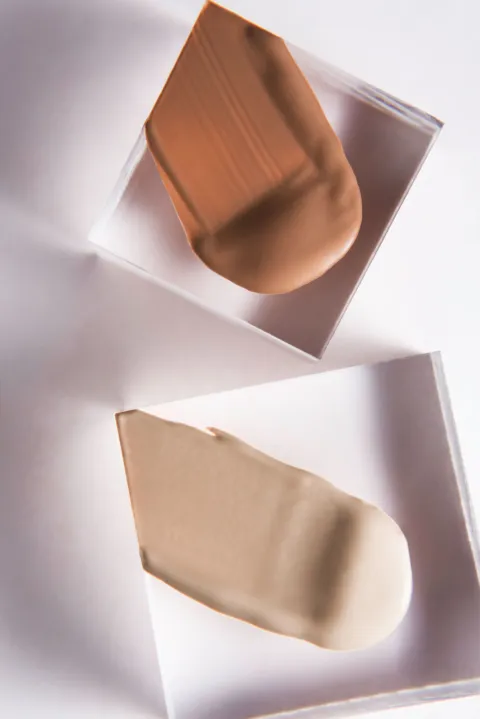
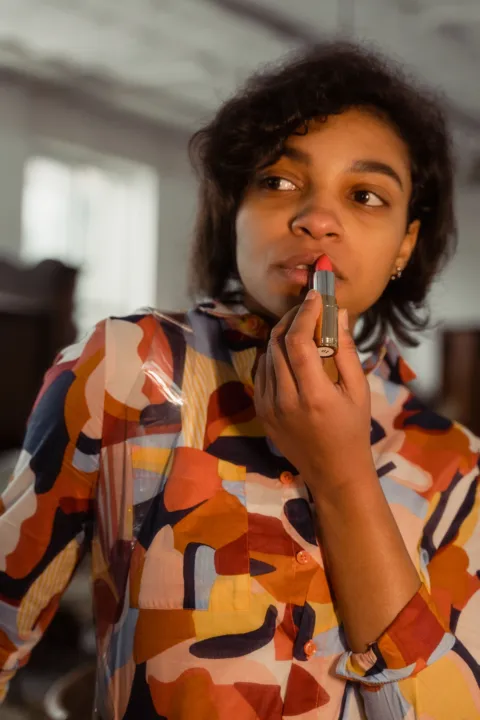
How to Choose a Blush Finish: Cream, Liquid or Powder
The texture of a blush shapes the result as much as the shade. A side-by-side comparison, three questions that settle the choice, and how to apply each.
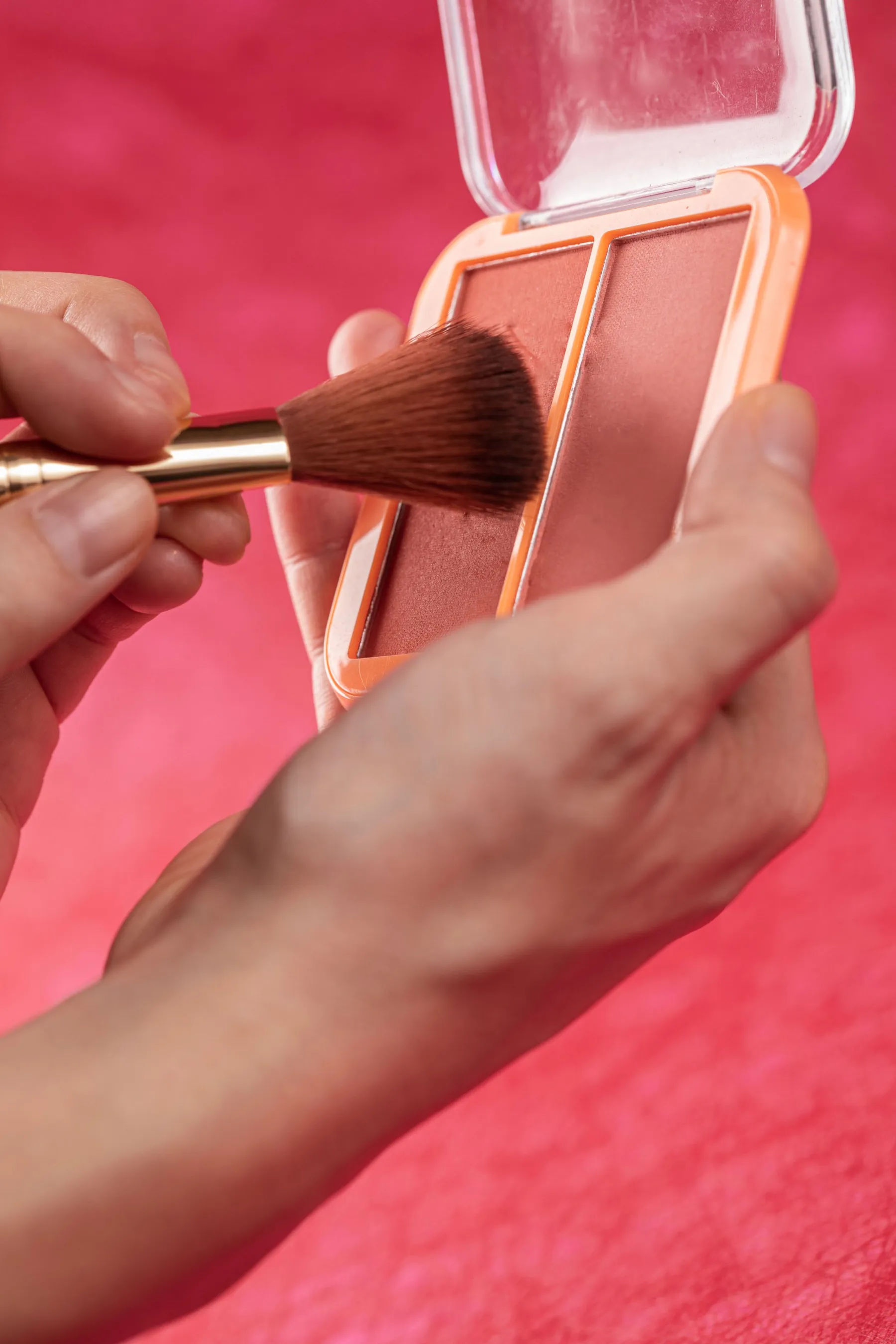
Most blush decisions get made at the shade level: pink or peach, soft or bright. The texture decides just as much. The same rose can look like a flush from a walk in one formula and like a clean stripe of color in another, and one of the three will sit better on top of whatever else you wear on your face.
This is a comparison, so here it is side by side first. The reasoning follows.
The three finishes at a glance
| Cream | Liquid | Powder | |
|---|---|---|---|
| What it is | A balm or stick, solid in the pan, soft on contact | A fluid or gel, usually in a tube or bottle with a dropper or doe-foot | Pressed or loose pigment in a compact |
| Typical look | Skin-like, slightly dewy | Sheer and stain-like, from a wash to quite vivid | Soft-focus, matte or satin |
| Sits best over | Bare skin, skin tint, liquid or cream foundation | Bare skin or liquid base, before any powder | Powder foundation, or any base that has been set |
| Tools | Fingers, a dense brush or a damp sponge | Fingers or a sponge, worked quickly | A fluffy brush |
| Working time | Generous; stays movable for a while | Short; many set within seconds | None to speak of; it lands where it lands |
| Easy to overdo? | Rarely | Yes, some are highly pigmented | Moderately; build in thin layers |
| Travels well | Yes, sticks especially | Yes, if the cap is secure | Pressed pans can crack if dropped |
Three questions that settle it
1. What is underneath?
The working rule in makeup application is simple: creams and liquids go on before powder, and powder goes on after. A cream blush tapped onto a face that has already been set with powder tends to grab in patches and can lift the base beneath it. A powder blush swept over a base that is still tacky can cling in one spot and refuse to blend.
So start from your base. If you wear a skin tint or nothing at all, cream and liquid are the natural fit. If you wear powder foundation, or you always set your base, powder blush is the low-effort choice. When layers start rolling up into little flecks, the cause is usually in the layering rather than the blush itself, and this checklist on why makeup pills walks through it.
2. How does your skin behave by mid-afternoon?
This is preference more than rule, but it is a common pattern. People whose skin gets shiny through the day often like powder, because it adds no extra slip and its matte surface stays matte. People whose skin feels tight or looks flaky by the afternoon often prefer cream, which does not cling to dry texture the way powder can.
Liquid sits in between. Many liquid blushes dry down to a thin stain that moves very little once set, which some people with oilier skin like for exactly that reason.
3. How much time and patience do you have?
Cream is the forgiving one. You can keep blending for a minute, add more, or wipe some back with a clean finger. Liquid rewards speed and a light hand: one small dot per cheek, blended straight away. Powder is quick with the right brush and the hardest of the three to fix once there is too much of it on the cheek.
How to apply each one
Cream
Warm the product by tapping a fingertip into the pan two or three times. Press it onto the upper cheek, then tap outward and upward with a clean finger until the edge disappears. Tapping matters more than the direction. Rubbing drags the base underneath; tapping leaves it alone.
Liquid
Put the product on the back of your hand first, not directly on your face. Pick up a little with a fingertip or the corner of a damp sponge, place it, and blend one cheek completely before touching the other. If it sets before you finish, a drop of your skin tint or moisturizer on the sponge will loosen the edge.
Powder
Swirl a fluffy brush over the pan, then tap the handle against your wrist to knock off the excess. Start where you want the most color and sweep toward the hairline. Two sheer passes look more even than one loaded one. If you overshoot, go over the area with the brush you used for face powder, or with a clean one, to diffuse it.
Using two finishes together
Layering is optional, and it is the usual answer when blush fades on you by lunchtime. The order follows the same rule as before: cream or liquid first, a light dusting of powder blush in a similar shade on top. The first layer gives the color depth and the second holds it in place.
Keep both layers thin. Two heavy coats do not last longer than two sheer ones; they just look heavier and move more.
A note on shade, since finish changes it
Finish shifts how a shade reads. Sheer liquids and creams let your own skin show through, so the result is partly your color and partly the product’s, and one shade suits a wider range of people. Powders are generally more opaque and look closer to what you see in the pan.
If a blush looks slightly off against your foundation, either too orange or too cool, the mismatch may be in the undertone. Working out your foundation undertone helps with blush and lip color as much as with base.
Which one for which day
- A quick weekday face: cream stick, fingers, done. It fits neatly into a five-minute makeup routine.
- A long day with no chance to touch up: liquid stain under a thin veil of powder blush.
- A fully powdered, matte base: powder blush, built in two light passes.
- A handbag kit: a cream stick again. It needs no brush and can be reapplied over existing makeup with a fingertip, provided the base underneath has not been heavily powdered.
Researched and written by Dates Force Editorial with AI assistance, from the published sources listed above — not from product testing. This is general information about everyday cosmetic care, not medical advice. How we work · Report an error
Keep reading
Why Makeup Pills — and What to Check in Your Routine
Those little rolls of product usually come from layering, not from your skin. Seven checks to run, in order of how easy they are to test.