Three Easy Hairstyles for Second-Day Hair
A low twist ponytail, a loose side braid and a claw-clip twist: three no-heat styles that work with day-two texture instead of against it.
Day-two hair has something freshly washed hair lacks: grip. Pins stay where you put them, twists hold their shape, and a braid doesn’t slide apart by lunchtime. The three styles below use that to your advantage. None of them asks for heat, and each takes a few minutes once your hands know the moves.
First, a two-minute reset
Before styling, deal with whatever the night did. What that means depends on your texture.
- Straight or wavy hair: lift the roots with your fingers and, if they look flat or oily, work a little dry shampoo or styling powder in at the scalp. Let it sit for a minute, then brush or shake it through. Smooth the lengths with a brush only as much as the style calls for.
- Curly or coily hair: skip the dry brush. The American Academy of Dermatology advises against brushing curly hair while it is dry, because it can lead to breakage and frizz. Instead, dampen your hands or mist the hair with water, smooth in a little leave-in conditioner, and separate any tangles with your fingers or a wide-tooth comb.
If you are short on time for everything else too, this reset pairs well with a five-minute makeup routine.
Style one: the low twist ponytail
Good for: shoulder-length hair and longer, any texture. Have on hand: one fabric-covered hair tie.
- Gather your hair at the nape of your neck and secure it with the tie, leaving it a little loose against your scalp.
- Just above the tie, split the hair in two with your fingers to make a small gap.
- Flip the ponytail up and push it down through the gap, then pull it all the way through.
- Gently tug the two halves of the ponytail apart to slide the tie up and tighten the twist.
The rolled sections on either side hide roots that have gone a little flat, which is why this style suits the second day so well. On curly and coily hair, the twist is softer and the ponytail keeps its volume; there’s no reason to smooth it out first.
Shorter hair that won’t reach the nape can do the same flip with just the top half, leaving the rest down.
Style two: the loose side braid
Good for: hair past the collarbone. Have on hand: one small covered elastic; a couple of bobby pins if you have layers.
- Sweep your hair over one shoulder. Don’t brush it flat — some unevenness is the look.
- Start a three-strand braid just below your ear, not at the scalp. Keep your hands relaxed so the braid stays wide.
- Stop a few centimeters (an inch or two) before the ends and secure with the elastic.
- Hold the end with one hand and, with the other, pull gently at the outer edge of each loop to widen the braid.
- Pin any short layers that escape near the neck, or leave them out around your face.
For curls and coils, a two-strand twist does the same job with less handling: divide the hair in two, twist both sections in the same direction, then wrap them around each other in the opposite direction so they lock together.
Day-two hair has something freshly washed hair lacks: grip.
Style three: the claw-clip twist
Good for: chin-length hair and longer; especially kind to thick hair that feels heavy in a ponytail. Have on hand: one claw clip sized to your hair — small for fine or short hair, large for thick or long.
- Gather your hair as if making a low ponytail and hold it in one hand.
- Twist the length two or three times, in one direction, until it starts to coil.
- Lift the twisted length straight up against the back of your head.
- Open the clip and close it over the twist and the hair underneath it, so the teeth catch both.
- Let the ends fan out over the top of the clip, or tuck them under the twist for a neater finish.
If the clip slides, the twist is usually too loose or the clip too small for the amount of hair. Very long hair can be folded in half before clipping.
How tight is too tight
All three styles are meant to sit loosely, and that is not only an aesthetic choice. The AAD lists pulling hair back tightly among the everyday habits that can damage it, and recommends wearing hair loosely pulled back and using covered bands made for hair.
Its simplest test is how the style feels: if a hairstyle is painful, it is too tight. Stinging on the scalp is another sign to take it down and redo it with less tension.
Picking one in the morning
- Flat roots, decent lengths: the low twist ponytail hides the roots and shows the lengths.
- Roots fine, ends tangled or frizzy: the side braid or two-strand twist tucks the ends away.
- Everything a bit undecided: the claw clip takes it all off your neck in one move.
For an evening, the same low gather can become a softer take on a sleek bun. And if smoothing day-two hair is where things tend to go wrong, the tool may be part of it — our guide to choosing a hairbrush by task covers which one to reach for.
Sources
- American Academy of Dermatology 6 curly hair care tips from dermatologists
- American Academy of Dermatology How to stop damaging your hair
- American Academy of Dermatology Hairstyles that pull can lead to hair loss
Researched and written by Dates Force Editorial with AI assistance, from the published sources listed above — not from product testing. This is general information about everyday cosmetic care, not medical advice. How we work · Report an error
Part of Five-Minute Fix
Keep reading
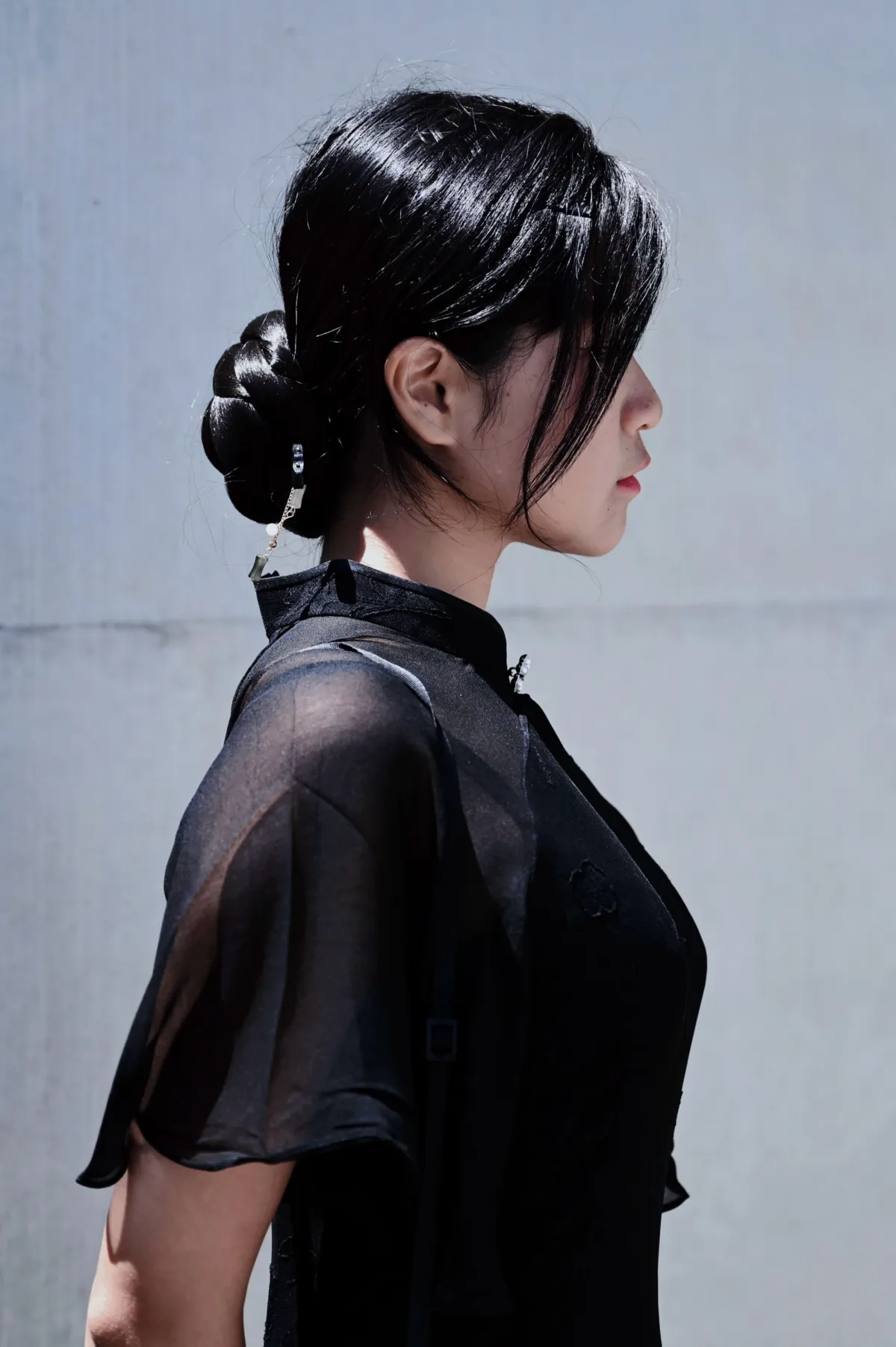
How to Make a Sleek Bun Feel Less Severe
A sleek bun looks strict because of tension, a sharp part and high shine. Seven small changes that soften it, starting with the one your scalp will notice.