How to Choose a Hairbrush for Your Styling Routine
Choose by task, not by trend: which brush or comb suits detangling, blow-drying, smoothing and shaping, and how that changes with texture.
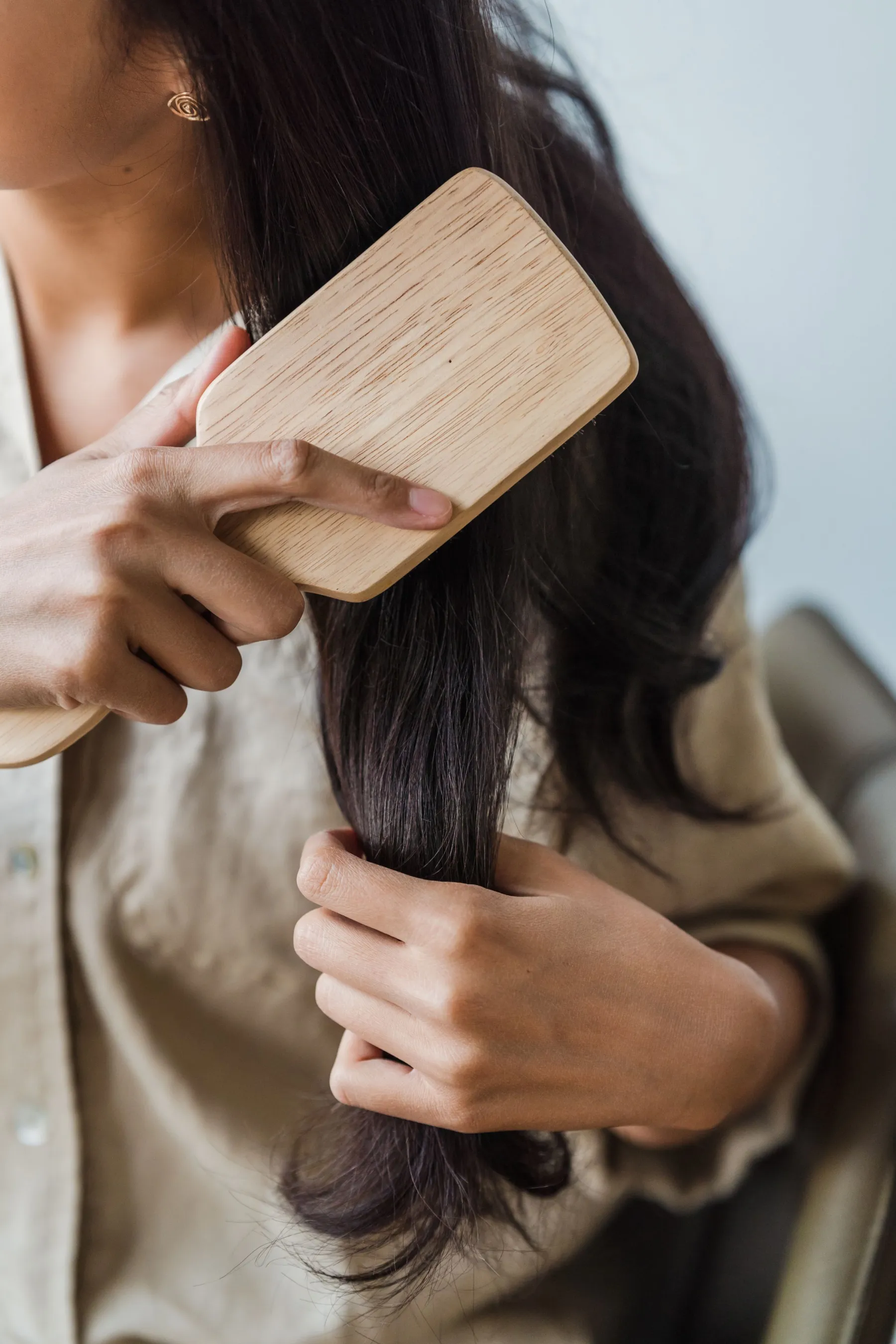
Most hairbrush advice starts with hair type. A more useful starting point is the job: detangling after a shower, blow-drying, smoothing a ponytail and refreshing curls are different tasks, and the tool that suits one can be the wrong choice for another. Work out which jobs you actually do in a week, and the shortlist gets short quickly.
The guide, by task
| What you are doing | Tool to reach for | Why it fits | Texture notes |
|---|---|---|---|
| Detangling wet or damp hair | Wide-tooth comb, or a flexible-bristle detangling brush | Widely spaced teeth move through knots with less pulling | Straight hair: let it dry a little first. Curly and coily hair: detangle damp, with conditioner in |
| Detangling dry hair | Paddle brush or cushioned brush with flexible pins | The cushion gives when it meets a knot instead of forcing through | Best for straight and loosely wavy hair; curls generally do better detangled damp |
| Blow-drying quickly | Vented brush | Openings in the head let air from the dryer pass through | Any texture being dried straight or loosely |
| Blow-drying with shape | Round brush | Hair wraps around the barrel; a larger barrel gives a looser bend | Small barrels suit short hair and fringes; large barrels suit long hair |
| Smoothing a ponytail or bun | Dense-bristle smoothing brush | Closely packed bristles lay surface hairs flat | For coils and curls, a soft small brush for edges plus hands for the rest |
| Parting and sectioning | Tail comb | The pointed handle draws a clean line | All textures |
| Lifting roots, shaping curls and coils | Wide pick | Lifts at the root without pulling curl clumps apart | Curly and coily hair |
Detangling: where the choice matters most
Wet hair is the moment to be choosiest. The American Academy of Dermatology notes that wet hair breaks more easily when combed or brushed, and its general advice is to use a wide-tooth comb rather than a brush to detangle wet hair.
The timing differs by texture. For straight hair, the AAD suggests letting it dry a bit before combing. For thick, curly or tightly coiled hair, the advice runs the other way: comb while the hair is damp, ideally in the shower before rinsing out conditioner. A review of hair cosmetics in the International Journal of Trichology explains part of the reasoning — conditioners reduce friction and improve combability, and the tight bends of very curly hair make it more prone to breaking when it is worked mechanically.
Whichever tool you use, the technique is the same: start at the ends, clear them, then move a little higher and repeat until you reach the roots. Going root-to-tip in one pass pushes every knot down into one larger knot.
Blow-drying: vented or round
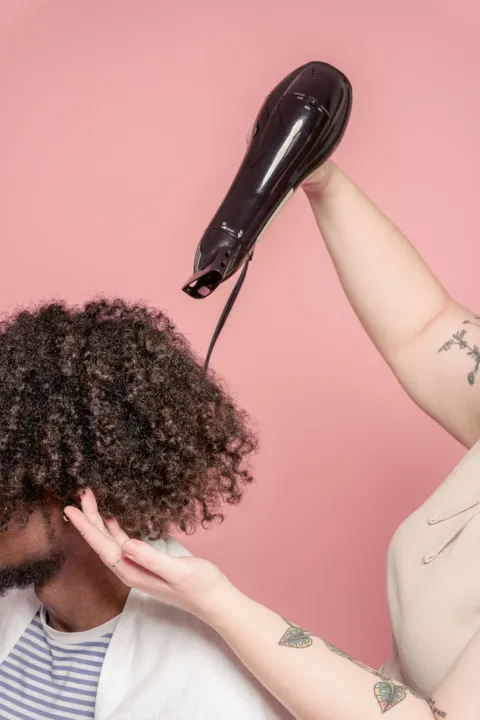
These two do different things. A vented brush is about speed: it directs hair while air moves through the brush head. A round brush is about shape: tension around the barrel creates smoothness and a bend at the ends.
If you choose a round brush, barrel size is the main decision. Hair should wrap around it at least once and a half; if it can’t, the barrel is too big to do anything. A metal or ceramic barrel also warms up under the dryer, so it counts toward the total heat your hair is getting — worth knowing if you are working on heat-styling habits that help reduce damage.
Wavy hair that’s being dried with its wave pattern intact rarely benefits from either. A diffuser and your hands do that job, as in our wash-day routine for wavy hair.
Smoothing and finishing
A dense smoothing brush is a finishing tool. It works on the surface, which makes it good for the last pass over a ponytail and not much use on knots. Using it to detangle means dragging packed bristles through tangles, which is exactly the pulling a wide-tooth comb avoids.
There is no reason to brush beyond what the style calls for. The AAD is direct on this point: hair never needs 100 brush strokes a day — it calls that a myth — and it recommends brushing and combing only to style.
What to check in your hand
- Tips of the pins. Run the brush over the inside of your wrist. Rounded tips glide; if any scratch, or the little caps have come off, pass on it.
- Seams on a comb. Feel between the teeth. A rough molded seam will catch hairs on every pass.
- Give in the cushion. Press the pins. A detangling brush should flex easily; a smoothing brush should feel firm.
- Size against your hair. A large paddle covers long, thick hair quickly but is clumsy on a bob. A compact brush is easier to control and to pack — relevant if you are building a travel hair kit.
- How it cleans. Brushes with widely spaced pins are easier to clear of hair than dense ones.
How many do you actually use?
For many routines, two tools cover nearly everything: one for detangling (a wide-tooth comb or flexible detangling brush) and one for the style you wear most (a round brush, a smoothing brush or a pick). Add a tail comb if you part your hair precisely.
Whatever you settle on, keep it clean. Pull loose hair out after each use, and every few weeks wash the brush in warm water with a little shampoo, rinse, and leave it to dry with the bristles facing down. It fits neatly into a ten-minute reset of your beauty shelf.
Replace a brush when pins are bent or missing their tips, or when a comb loses a tooth — at that point it is snagging hair, not styling it.
Sources
- American Academy of Dermatology Hair styling without damage
- American Academy of Dermatology Tips for healthy hair
- American Academy of Dermatology How to stop damaging your hair
- American Academy of Dermatology 6 curly hair care tips from dermatologists
- International Journal of Trichology (via PubMed Central) Hair Cosmetics: An Overview
Researched and written by Dates Force Editorial with AI assistance, from the published sources listed above — not from product testing. This is general information about everyday cosmetic care, not medical advice. How we work · Report an error
Keep reading

A Low-Fuss Wash-Day Routine for Wavy Hair
One wash day in order, from the first rinse to dry hair: where to put shampoo and conditioner, when to stop combing, and how to dry waves without breaking them up.