Any hot tool changes hair to some degree; that is how it works. A flat iron or a blow-dryer reshapes the fiber with heat, and no product or technique brings the effect on the hair down to zero. What habits can do is lower the dose: less heat, for less time, less often, on hair that is in a better state to take it.
The habits below are sorted by how much they ask of you, from changes that cost nothing to ones that take some planning. Start at the top and go as far down as suits your routine.
Tier one: no extra time, no new purchases
Turn the dial down
The American Academy of Dermatology advises using the lowest heat setting on a blow-dryer, and low or medium heat on a flat iron. Many people set a tool to maximum on the first day and never touch the control again.
Try the lowest setting that gives you the result in one or two slow passes. Fine, color-treated or bleached hair generally shapes at lower settings than thick or coarse hair. If your tool has only an on-off switch, that is worth knowing the next time you replace it.
Only iron dry hair
The AAD is specific here: flat irons belong on dry hair. Damp hair between hot plates hisses for a reason, since the water in it is being heated fast. A review in the International Journal of Trichology describes water boiling inside the fiber and forming bubbles as one of the ways heat harms hair.
If you hear sizzling or see steam, stop and finish drying first.
Shorten the contact
For curling irons, the AAD suggests leaving the iron in place for only a second or two, and limiting how long any hot comb or iron touches the hair. In practice: keep a flat iron moving, and count the seconds a curl spends on the barrel instead of guessing. If a section takes many passes, take a thinner section instead of adding passes.
Keep the dryer moving, and back it off
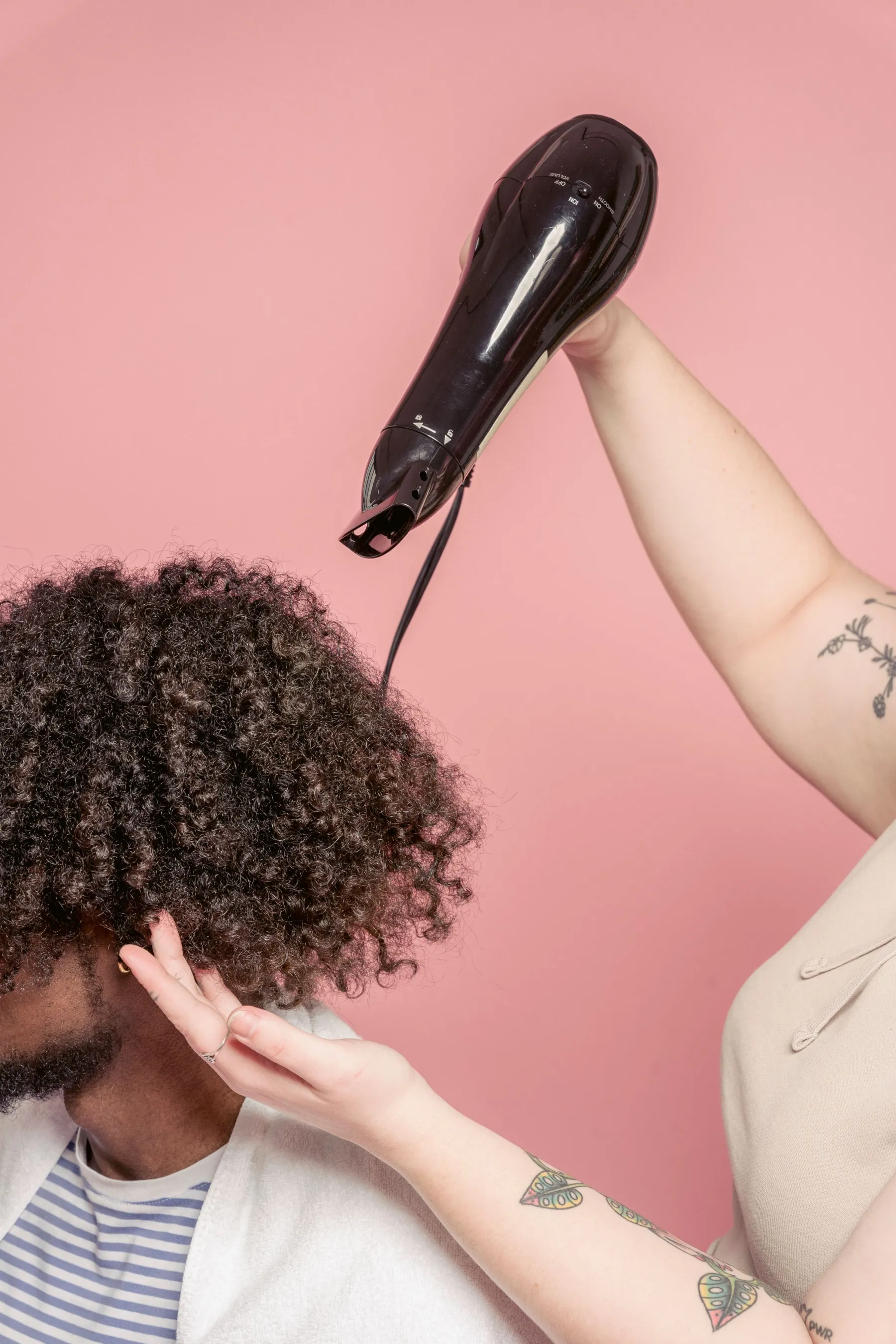
Holding a dryer close to one spot concentrates the heat there. The same review cites research pointing to a dryer held at about 15 cm (6 inches) from the hair and kept in continuous motion as a lower-damage way to blow-dry. Keep your wrist loose and the nozzle at roughly a hand’s length from your head.
A protectant reduces the effect of heat; it does not cancel it.
Tier two: a minute or two more
Let the air do the first part
The AAD recommends letting hair partially air-dry before you style it. Blot with a towel, do something else for ten or fifteen minutes, then pick up the dryer. The blow-dry gets shorter because there is less water to remove.
Blot, do not rub. The academy notes that wet hair breaks more easily, and suggests wrapping it in a towel to absorb the water.
Apply a heat protectant, with realistic expectations
The AAD’s tips for healthy hair include using a heat-protectant product before heat styling. The trichology review explains the idea: silicone-based protectants are meant to spread heat more evenly along the fiber.
A protectant reduces the effect of heat; it does not cancel it. It works alongside lower settings, not as a license for higher ones.
Apply it evenly, section by section, and comb it through with a wide-tooth comb so it reaches the underside. If you are using a flat iron or curling iron, give a spray-on product time to dry before the tool touches the hair.
Work in sections
Clipping the hair into four to six sections feels slower and usually is not. Each section gets one deliberate pass instead of the same top layer being ironed repeatedly while the hair underneath stays untouched.
Use the right brush under the dryer
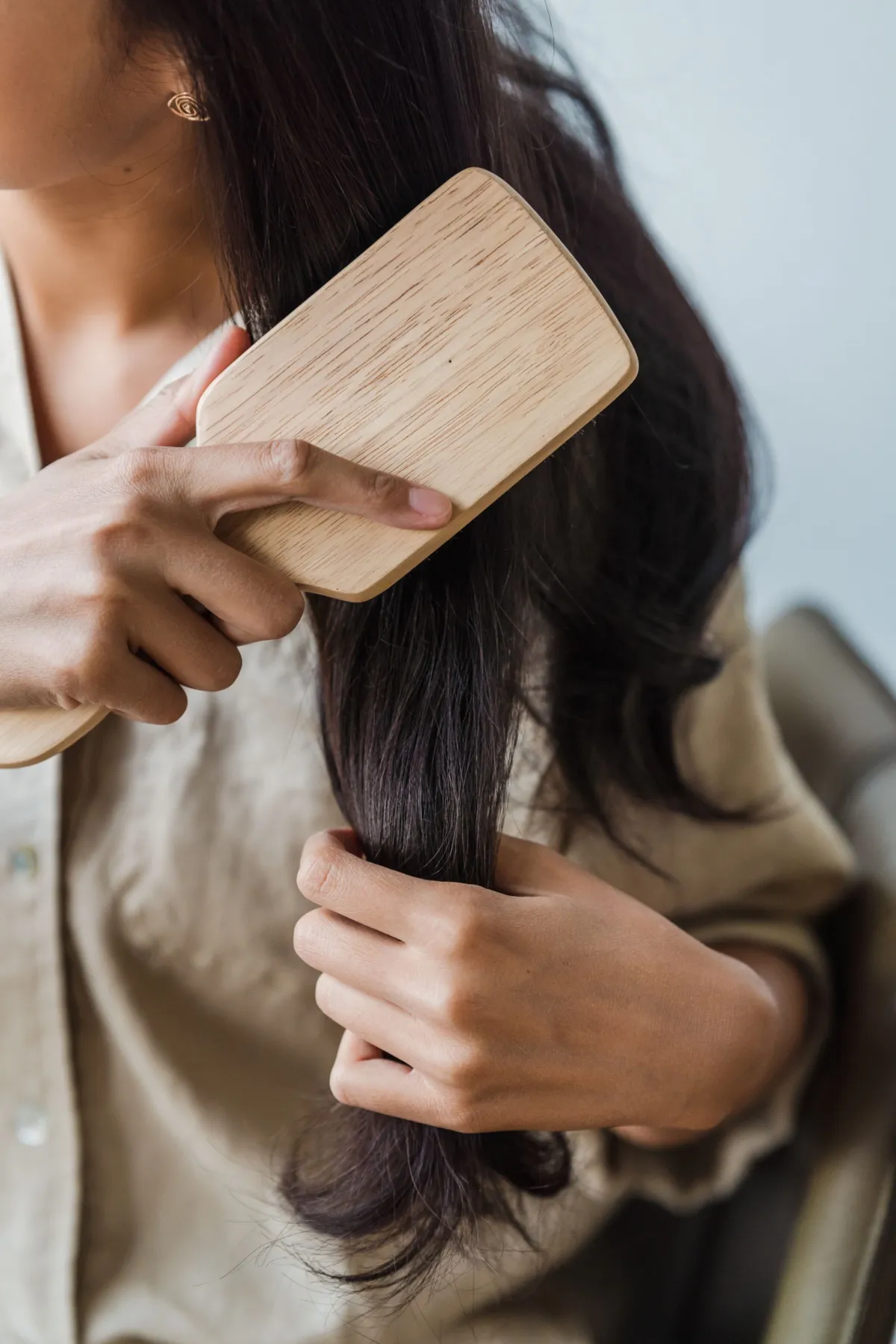
A brush with a metal or ceramic barrel warms up in the airflow and adds to the heat on the hair. A vented brush lets air through and speeds things up. Our hairbrush guide by task covers which does what.
Tier three: changes to your week
Lower the frequency
The AAD suggests blow-drying less often across the week, using a flat iron no more than every other day, and, in its general advice on preventing damage, aiming to use hot tools once a week or less. Those are different thresholds for different situations; the direction is the same.
The practical route is making one styling session last. A blow-dry on wash day can carry two or three days with a loose braid or a silk or satin scarf overnight and a touch-up at the front only. On the days in between, no-heat second-day hairstyles cover the gap.
Touch up, do not redo
On day two, restyle only what shows: the front pieces, the fringe, the top layer. Two minutes of heat on a quarter of your hair is a much smaller dose than a full restyle.
Build a routine around your natural pattern
Having one reliable air-dry or low-heat method gives you a real alternative on days when heat is optional. For waves, a diffuser on low or a full air-dry both work; see our wash-day routine for wavy hair. For curls and coils, a wash-and-go, twist-out or braid-out sets the shape with no hot tool at all.
Keep the hair conditioned
The AAD recommends conditioner after every shampoo. Well-conditioned hair also detangles with less force, which matters because heat styling usually involves a lot of brushing and combing.
Signs to ease off
Hair that is getting more heat than it tolerates tends to show it at the ends first: rough texture, more split ends, strands that snap when brushed, curls or waves that have stopped springing back in the sections you iron most.
If you notice these, lower the temperature and frequency and book a trim; the ends will not return to their earlier state, but new growth is unaffected. The AAD notes that excessive heat affects every hair type, so this applies whether your hair is straight, wavy, curly or coily.
If you change only three things
- Set the tool lower than you think it has to be, and test.
- Let hair air-dry partway, and never iron it damp.
- Make one styling session last two or three days.
Sources
- American Academy of Dermatology How to stop damaging your hair
- American Academy of Dermatology Hair styling without damage
- American Academy of Dermatology Tips for healthy hair
- International Journal of Trichology (via PubMed Central) Hair Cosmetics: An Overview
Researched and written by Dates Force Editorial with AI assistance, from the published sources listed above — not from product testing. This is general information about everyday cosmetic care, not medical advice. How we work · Report an error
Keep reading
How to Choose a Hairbrush for Your Styling Routine
Choose by task, not by trend: which brush or comb suits detangling, blow-drying, smoothing and shaping, and how that changes with texture.