A Low-Fuss Wash-Day Routine for Wavy Hair
One wash day in order, from the first rinse to dry hair: where to put shampoo and conditioner, when to stop combing, and how to dry waves without breaking them up.

Wavy hair sits between two sets of advice. Routines written for straight hair tend to brush the pattern out; routines written for tight curls can involve more product and more steps than a wave will hold up. What follows is a single wash day, in order, with as few steps as the result allows. Expect it to take about fifteen minutes of actual effort, plus drying time.
Before the water: two minutes
Look at what your hair is doing today. Roots that feel coated and waves that have gone limp point to a proper shampoo. Lengths that feel rough or tangle easily point to more conditioner and less handling. That quick read decides how you use the next ten minutes.
If your hair is knotted, loosen the worst of it with your fingers now. Save the comb for the shower, when there is conditioner in your hair to help it slide.
In the shower
Shampoo the scalp, not the lengths
The American Academy of Dermatology’s guidance is to concentrate shampoo on the scalp instead of washing the whole length, which clears oil and buildup where they collect without drying out the ends. Massage with the pads of your fingers, then let the lather run through the lengths as you rinse. That is enough cleansing for most of the hair.
How often to do this is personal. The same guidance ties washing frequency to how oily or dirty your hair gets, not to a fixed schedule. For many people with waves that works out at every two to four days, but your scalp is the judge.
Condition by feel
The AAD suggests conditioner on the ends for fine or straight hair and along the full length for dry or curly hair. Waves fall in the middle, so start from the middle: apply from about ear level down, and add more or go higher only if the hair still feels rough.
Fine waves that drop by the afternoon usually do better with a small amount, kept away from the roots. Thick or coarse waves can take more.
Detangle now, then stop
With conditioner still in, work through with a wide-tooth comb or your fingers, starting at the ends and moving upward. Conditioner is doing real work here: a review in the International Journal of Trichology notes that it lowers friction between fibers and reduces combing forces.
This is the last time a comb touches your hair today. Everything after this point is about keeping the wave groups that form as it dries. If you are deciding which tool to keep in the shower, our hairbrush guide by task covers the options.
Rinse with your head tilted back, and try a light hand: some people with waves like to leave a trace of slip in the ends. Before you step out, cup the hair in your palms and squeeze upward toward the scalp a few times to press water out and encourage the bend.
This is the last time a comb touches your hair today.
Out of the shower: the two minutes that matter
Wet hair is more fragile than dry hair, and the AAD’s advice is to wrap it in a towel to absorb water instead of rubbing. For waves, rubbing has a second cost: it breaks up the groups of strands that would have dried into defined waves.
So blot and scrunch. A soft towel or a cotton T-shirt both work; gather a section into the fabric, lift it toward the scalp, squeeze and release. Go around the head once. The hair should be damp, not dripping.
One product, applied one way
A low-fuss routine uses a single styler. Which one depends on what you want from the day:
- A light leave-in or cream for softness and less frizz, with a looser wave.
- A mousse or foam for lift at the root and hold without much weight; often the easiest choice for fine waves.
- A light gel for the most definition and the longest hold; it dries firm and is scrunched soft afterward.
Spread a small amount between your palms. Smooth it lightly over the surface of the hair, then scrunch it in from the ends up. Avoid raking it through from the roots with your fingers, which separates the wave groups you just formed. If you part your hair, set the part now with your fingertips.
Drying: pick one of two paths
Air-dry
The simplest option, and the AAD recommends letting hair air-dry when you can. The whole technique is restraint: once the product is in, keep your hands out of it until it is completely dry. Touching half-dry waves is the most common reason they turn fluffy.
If your roots dry flat, slide a few small clips in at the crown, lifting the hair straight up from the scalp, and take them out when it is dry.
Diffuse
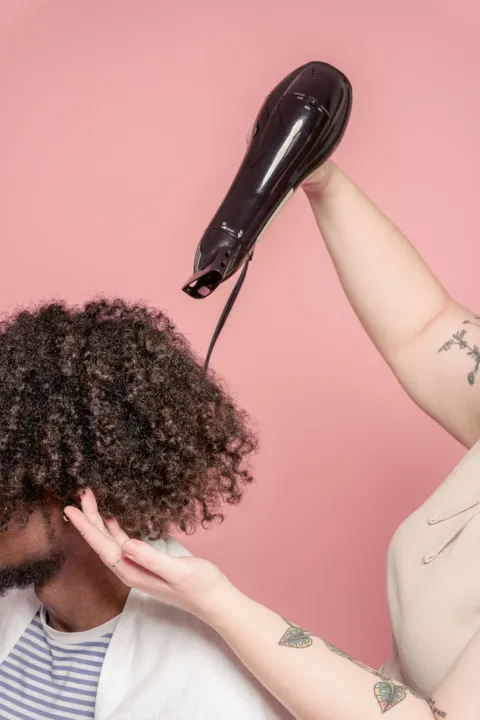
A diffuser attachment spreads the airflow so it dries the wave without blowing it apart. Use low or medium heat and low speed. Rest a section of hair in the bowl, lift it toward the scalp, hold for several seconds, lower it, and move on. Keeping the dryer moving from section to section also means no single area sits in the heat for long.
Stopping when the hair is about 80 percent dry and letting the air finish the job is a reasonable middle route. For more on keeping heat exposure modest, see our piece on heat-styling habits that help reduce damage.
The routine at a glance
- Loosen knots with your fingers.
- Shampoo the scalp; let the lather rinse through the lengths.
- Condition from ear level down; comb through, ends first.
- Rinse, then squeeze upward.
- Blot and scrunch with a towel or T-shirt.
- Scrunch in one styler.
- Air-dry or diffuse on low. Hands off until dry.
Adjusting next time
Wash day rarely lands perfectly the first time. Change one thing per wash so you can tell what made the difference.
- Waves fell flat by midday: use less conditioner, keep it lower, or switch to a lighter styler.
- Frizz with little pattern: apply the styler to wetter hair, and touch it less while it dries.
- Definition at the ends, straight at the top: try root clips, or diffuse the roots first.
- Stiff or coated feel: you are probably using more product than the hair can hold. Halve it.
Tomorrow the pattern will be looser, and that is useful in its own way. Day-two waves have grip, which makes them good material for easy second-day hairstyles.
Sources
- American Academy of Dermatology Tips for healthy hair
- American Academy of Dermatology How to stop damaging your hair
- American Academy of Dermatology Hair styling without damage
- International Journal of Trichology (via PubMed Central) Hair Cosmetics: An Overview
Researched and written by Dates Force Editorial with AI assistance, from the published sources listed above — not from product testing. This is general information about everyday cosmetic care, not medical advice. How we work · Report an error
Part of The Weekend Edit
Keep reading
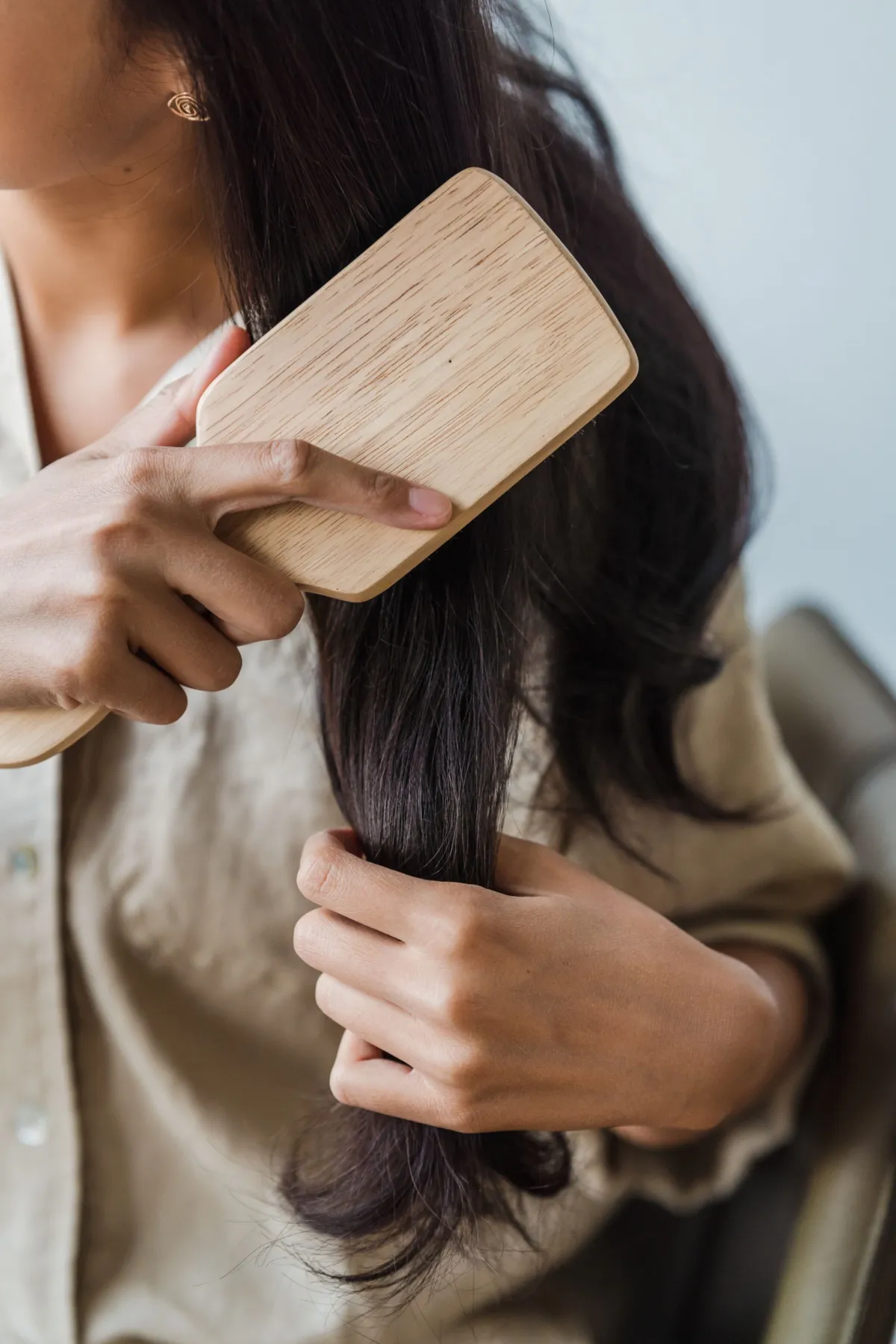
How to Choose a Hairbrush for Your Styling Routine
Choose by task, not by trend: which brush or comb suits detangling, blow-drying, smoothing and shaping, and how that changes with texture.