A Ten-Minute Reset for Your Makeup Bag and Beauty Shelf
One timer, one zone, five stages. A minute-by-minute procedure for clearing out, checking, cleaning and re-shelving your makeup bag or beauty shelf.
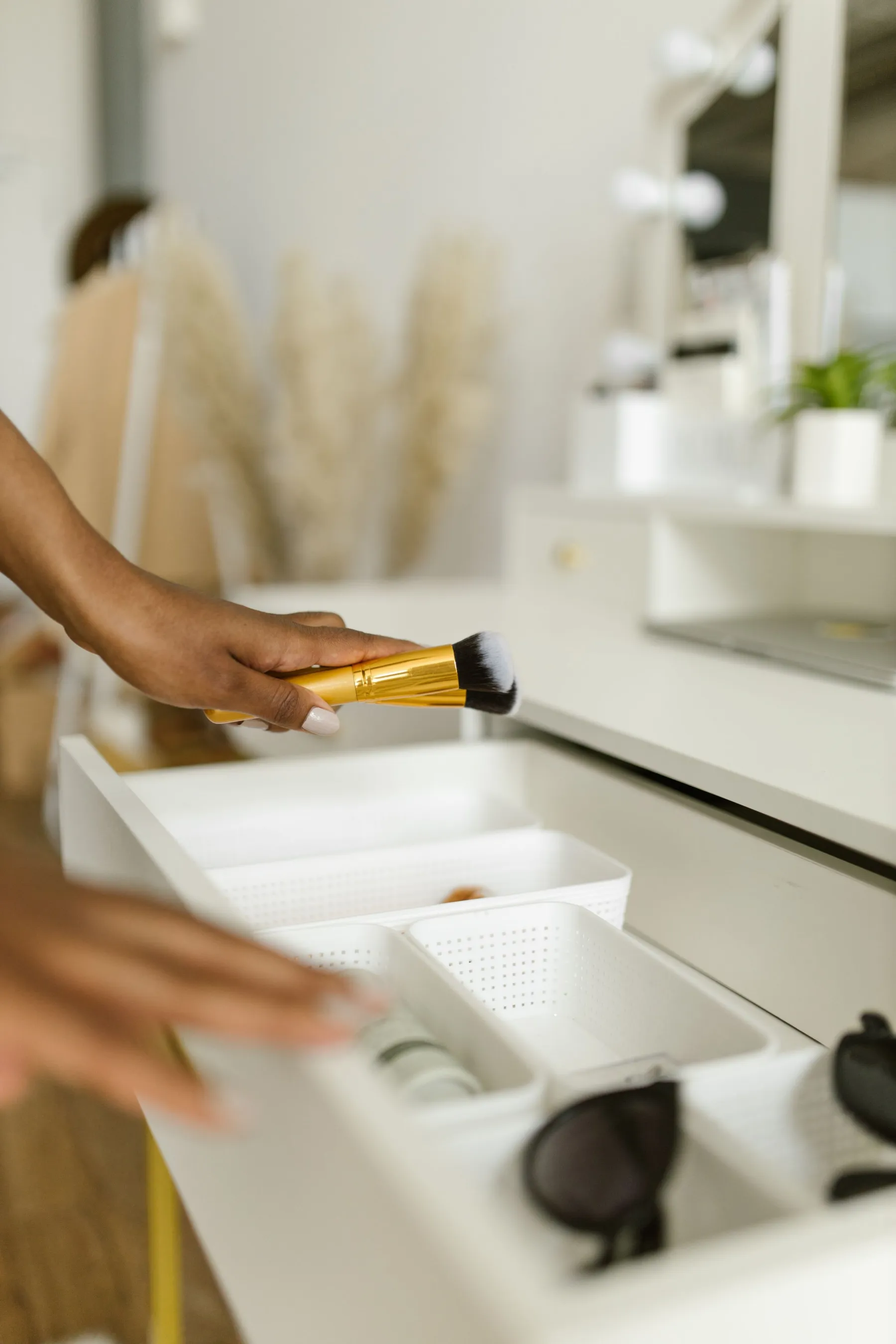
Set a timer for ten minutes. Not an afternoon, not “when I get around to it”: ten minutes, with a trash bag, a damp cloth and a pen within reach.
The aim is modest. You are not reorganizing your bathroom or building a system. You are removing what should not be there, wiping down what stays, and putting the things you use every day where your hand lands first. A timer keeps it from turning into a project, which is the reason it actually gets done.
Before you start the clock
Gather four things: a small trash bag, a damp cloth or a couple of wipes, a towel to work on, and a permanent marker or a few sticky labels. Pick one zone: either the makeup bag or one shelf. Ten minutes covers one of them properly. The other can have its own ten minutes tomorrow.
0:00–2:00 — Empty everything onto the towel
Tip the whole bag out, or clear the entire shelf. Everything, including the loose hair ties and the three lip balms. Do not sort yet.
Seeing it all at once is half the benefit. Duplicates become obvious, and so does the product you had forgotten you owned. While the bag or shelf is empty, set it aside to be wiped at the end.
2:00–5:00 — The quick check: look, smell, read
Pick up each item once and run three fast checks. If it fails any of them, it goes in the trash bag without debate.
Look and smell
The U.S. Food and Drug Administration lists the common signs that a cosmetic has changed: a different color or texture, a noticeable smell, oil and water separating in a cream or lotion, or a product that has dried out, hardened or cracked.
Read the date symbols
Labels vary by where the product was made for sale, which is worth knowing before you go hunting for a date that is not there.
| What you see | What it means | What to do |
|---|---|---|
| An open-jar symbol with a number, such as 6M or 12M | EU-style “period after opening”: how many months the product is meant to be used once opened | Count from when you opened it. If you cannot remember, judge by look and smell. |
| An hourglass symbol or “best used before the end of” with a date | A date of minimum durability, used in the EU for products that keep 30 months or less | Past the date: let it go. |
| No date at all | Normal for many products. In the U.S., no law requires cosmetics to carry an expiration date | Rely on the look-and-smell check, and label it today. |
Treat any date as a guide, not a guarantee. The FDA points out that heat, moisture, air and sunlight all change products, so how something was stored matters as much as the calendar. Products that are also regulated as drugs in the U.S., such as makeup labeled with an SPF, are different: drugs are required to carry expiration dates, so respect those.
The eye-product rule
Eye makeup gets stricter treatment, because infections in the eye area can be serious. The FDA’s eye cosmetic safety advice is to discard mascara three months after purchase, and never to revive a dried-up tube with water or saliva. If you cannot remember when a mascara was bought, that is your answer.
5:00–7:00 — Wipe and date
Two minutes, two jobs.
Wipe. Run the cloth over lids, the necks of tubes, compact mirrors and the outsides of bottles. Wipe the inside of the empty bag or the bare shelf and let it air dry. The FDA’s guidance is simply to keep containers and applicators clean; you are not sterilizing anything, only removing the film of product and dust.
Date. For anything you opened recently, write the month and year on the base with the marker. From now on the open-jar number means something, because you know when the clock started. For anything undated that passed the look-and-smell check, write today’s date and “checked”.
Set brushes and sponges that need a proper wash to one side. Washing them is its own task; the reset only identifies them.
7:00–9:00 — Put back by frequency, not by category
Sort what is left into three groups as it goes back:
- Daily. The handful of things you use most days. These go at the front of the shelf or in the bag’s main compartment, with nothing in front of them.
- Weekly or occasional. Behind or beside the daily group, still visible.
- Not used in months. Be honest. If it is in good condition and you want it, give it a deliberate place. If you are keeping it out of guilt, it leaves.
For a makeup bag, this is also the moment to compare what remains with a sensible core kit. Our guide to what belongs in a small, useful makeup bag gives you a list to check against.
Where things live matters too. The FDA notes that moisture, as in a bathroom, makes it easier for bacteria and fungi to grow, and that heat can break down preservatives. If there is a cool, dry drawer available, it is a better home than the shelf above the shower. Fragrance in particular does better elsewhere, as explained in how to store perfume away from heat and light.
9:00–10:00 — One note, then stop
In the last minute, write down only what you threw away and will genuinely replace. Usually it is one or two things: a mascara, perhaps a concealer. That is your whole shopping list, and it keeps the reset from becoming a reason to buy six new products.
Then tie the trash bag, put the dirty brushes by the sink, and stop when the timer goes. An unfinished corner can wait for the next round.
Ten minutes is short enough that you will do it again next month.
What makes the next reset faster
- Date things when you open them. Keep the marker in the same drawer.
- Do not share eye or lip products. The FDA’s advice is plain: another person’s bacteria may be hazardous to you.
- Finish one before opening the next. Two open tubes of the same thing are both aging.
- Close lids fully. Air dries products out and changes them.
The same checks apply to creams and serums, with a little more attention to dates and storage. When you have another ten minutes, organizing your skincare shelf and checking expiry dates covers that side in detail.
Sources
- U.S. Food and Drug Administration Shelf Life and Expiration Dating of Cosmetics | FDA
- U.S. Food and Drug Administration Cosmetics Safety Q&A: Eye Cosmetic Safety | FDA
- EUR-Lex (European Union) Regulation (EC) No 1223/2009 of the European Parliament and of the Council of 30 November 2009 on cosmetic products (recast)
Researched and written by Dates Force Editorial with AI assistance, from the published sources listed above — not from product testing. This is general information about everyday cosmetic care, not medical advice. How we work · Report an error
Part of Five-Minute Fix
Keep reading
What Belongs in a Small, Useful Makeup Bag
A handbag makeup kit is for repairs, not a second application. Eight items that earn the space, what stays home, and how to keep it all clean.