Getting Ready for a Haircut: What to Tell Your Stylist
The first five minutes decide most of a haircut. A checklist for what to bring, what to say and what to ask before the scissors come out.
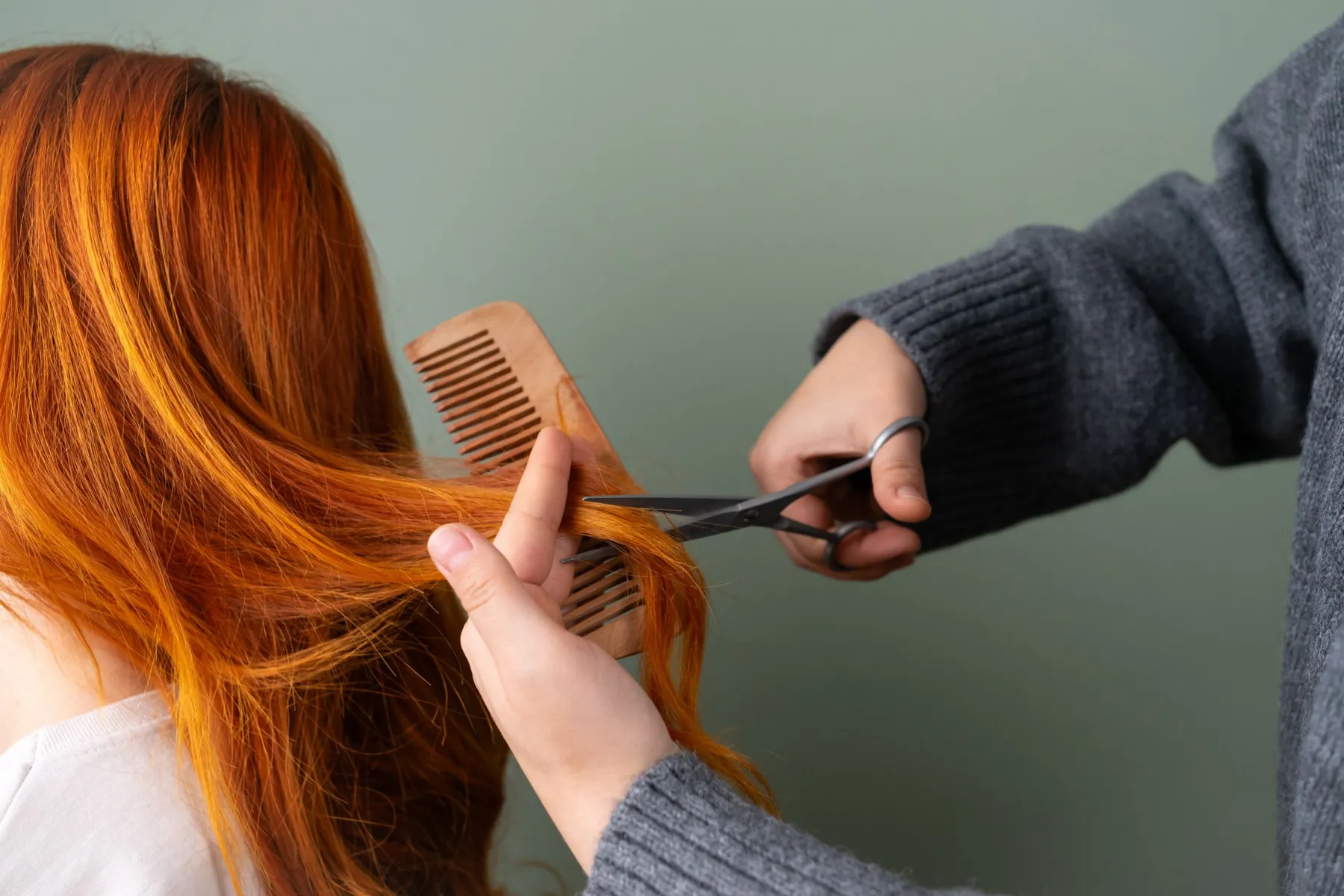
A haircut is mostly decided in the first five minutes, before any scissors come out. The stylist is working from what you say, what you show and what they can see, and the more precise the first two are, the less guessing goes into the cut. Here is a checklist to run through before the appointment and during the consultation.
Before you go
Collect three kinds of photo
- What you like. Two or three pictures, ideally of people whose hair is similar to yours in texture and thickness. A cut on fine straight hair will sit differently on dense curls, and the other way around.
- What you do not want. One “not this” photo is often more useful than three “yes” photos, because it marks the edge of the brief.
- Your own hair on a day you liked it. This shows the stylist what your hair does when it cooperates, and what you consider a good result.
For each photo, be ready to say what you like about it: the length, the way it frames the face, the movement, the fringe. People often like one feature of a picture and the stylist can only know which one if you say.
Arrive with your hair the way you usually wear it
If you wear your curls natural most days, come with them natural. If you straighten every morning, come straightened. The stylist learns a lot from seeing the everyday version, including where it falls, where it lifts and how you part it.
Check when you book whether the salon prefers clean, dry hair or washes it there, and whether curly cuts are done dry. Practices differ.
Know your own routine
Time yourself one morning. “I spend five minutes and I air-dry” and “I blow-dry with a round brush every day” lead to different haircuts. Be accurate, not aspirational; a cut designed for a routine you do not keep will only look right on the day you leave the salon.
In the chair: the checklist
Run through these out loud. It takes two or three minutes.
- Length, shown with your hands. Point to where you want the hair to end: “at the collarbone,” “just below the chin.” Words like “a trim” and “a few inches” mean different things to different people. If you use a number, say the unit, and show it between your fingers as well.
- Length when dry. Wavy, curly and coily hair springs up as it dries, sometimes by a lot. Say where you want it to sit dry and let the stylist work out the wet length.
- What must stay. “I still want to be able to tie it back” or “I want to keep the length at the front” are hard limits. Say them first.
- How you style it and how often. Tools, products, time, and how many days you go between washes. If you are trying to use heat less, mention it; some shapes depend on a blow-dry and some do not. Our guide to heat-styling habits covers that side.
- Where you part and whether you tuck. A part, a habit of tucking hair behind one ear, glasses, headphones, a helmet: all of these change how a cut sits.
- What bothered you about the last cut. “It felt heavy at the bottom,” “the layers were too short to tie back,” “it took too long to dry.” Specific complaints are easy to design around.
- History. Color, bleach, chemical straightening or perms, even from a year or two ago if that hair is still on your head. It affects how the hair behaves under the scissors.
- How often you will be back. A sharp bob or a fringe looks best with regular trims. If you come in twice a year, ask for a shape that grows out well.
Translate the vague words
Some salon vocabulary sounds precise and is not. If you use one of these, add what you mean by it.
| If you say | Add this |
|---|---|
| “Just a trim” | How much, shown between two fingers, and whether the shape stays the same |
| “Layers” | Where the shortest layer should fall (cheekbone, chin, collarbone) and whether you want them visible or blended |
| “Take the weight out” | Where it feels heavy: the ends, the sides, the back of the head |
| “Face-framing” | Where the shortest piece should start and whether it has to tuck behind your ear |
| “Texture” | Whether you mean choppier ends, more movement, or less bulk |
| “Low-maintenance” | Your real routine in minutes, and how often you come in |
| “Shorter, but not short” | A point on your body, and your “not this” photo |
Questions worth asking back
A consultation goes both ways. These questions tend to get the most useful answers.
- “How will this sit with my texture when I do not style it?”
- “What would I have to do each morning for it to look like the photo?”
- “What will it look like in six to eight weeks?”
- “Is there a version of this that suits my hair better?”
- “Can we start longer and go shorter if I like it?”
The last one is always allowed. Hair can come off in two stages; it cannot go back on.
If a fringe is part of the plan, raise it at the start, not as an afterthought at the end, and read through what to consider before cutting a fringe first.
During and after the cut
Speak up early. If the first section looks shorter than you expected, say so then. A stylist would much rather pause after one snip than hear about it at the mirror.
When the styling starts, watch what they do and ask about it: which product, how much, where it goes, what the dryer is doing. If you wear your hair wavy or curly, ask them to finish it that way so you see the cut as you will wear it; our wash-day routine for wavy hair can fill in the home version.
Before you leave, check three things: the back in a hand mirror, the length with your head held normally, and whether it ties back if that was on your list. Small adjustments are quick while you are still in the chair.
Then take a photo once you are home, front, side and back. If you love the cut, that photo is the best brief you will ever bring to the next appointment.
Researched and written by Dates Force Editorial with AI assistance, from the published sources listed above — not from product testing. This is general information about everyday cosmetic care, not medical advice. How we work · Report an error
Keep reading

What to Consider Before Cutting a Fringe
A fringe takes minutes to cut and months to grow out. Eight questions about your hair, your mornings and your routine to answer before you book.