How to Read a Moisturizer Label Without the Hype
The front of the pack is marketing; the back is regulated. A top-to-bottom walkthrough of what each part of a moisturizer label can tell you.
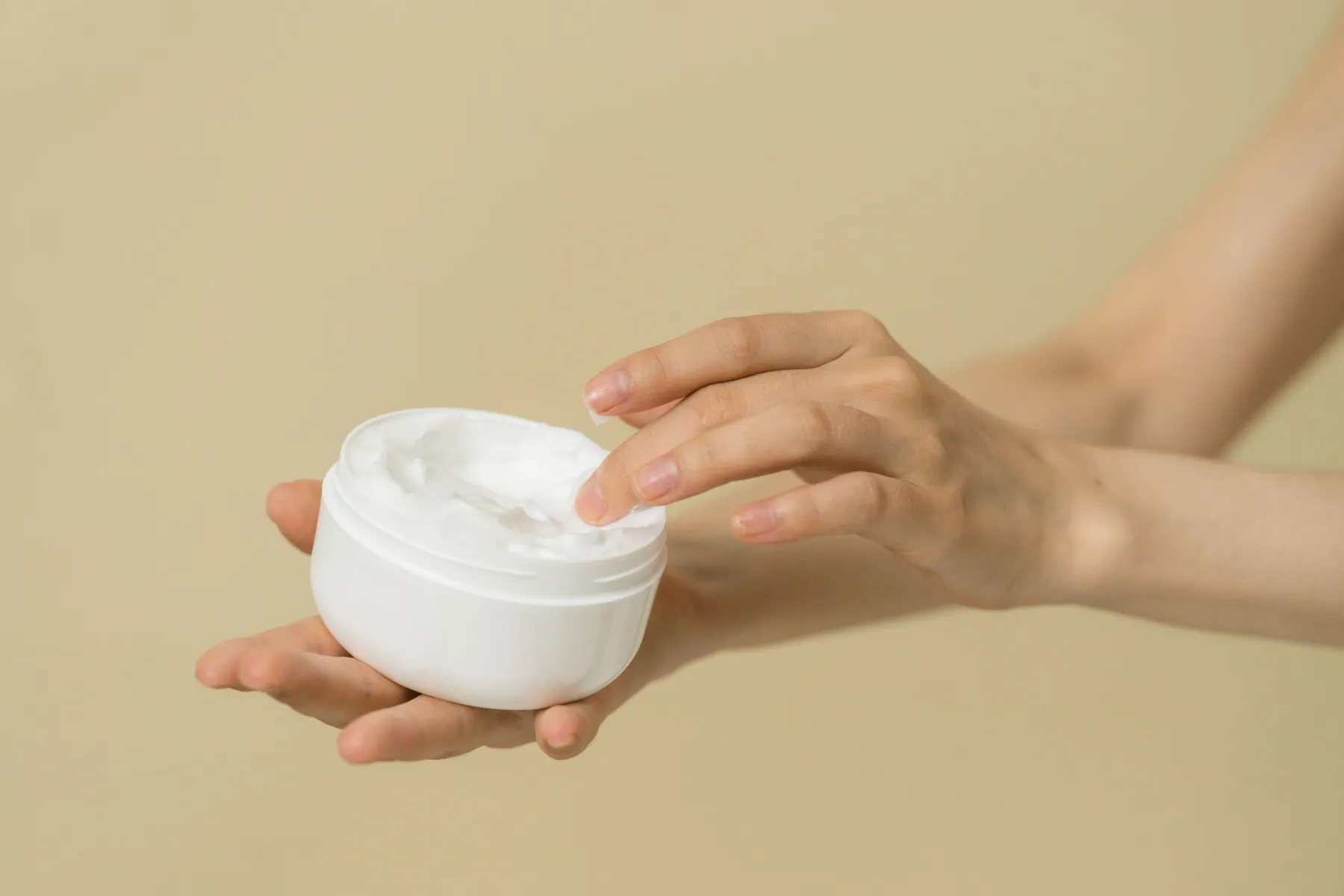
Pick up any moisturizer and turn it around slowly. The front is written by a marketing team. The back is governed by regulation. Knowing which is which makes a five-minute decision in a store aisle a good deal easier, and it only takes one pass from the top of the pack to the bottom.
This walkthrough follows that order. It draws on United States and European Union rules, which cover most of what is sold internationally. Other countries have their own versions.
Stop 1: The product name and the texture word
The name tells you less than the noun after it. Gel, lotion, cream and ointment are the words that matter, because they describe how thick the product is. The American Academy of Dermatology’s guide to picking a moisturizer ranks them: a gel is often water-based and the lightest, a lotion is lighter than a cream, a cream has more oil and moisturizes more, and an ointment is the thickest.
That one word narrows the choice more than any claim around it. Dry skin generally does better with a cream or ointment; oily skin with a gel.
Stop 2: The front-of-pack claims
Here the wording gets looser. A few common terms, and what stands behind them:
“Hypoallergenic”
In the United States this has no legal definition. The FDA states that there are no federal standards or definitions governing the term, that it “means whatever a particular company wants it to mean,” and that manufacturers are not required to submit proof of the claim to the agency. It may reflect real care in formulation. The word alone does not tell you.
“Fragrance-free” and “unscented”
These are not the same. The FDA notes that a product labeled unscented may contain just enough fragrance to mask the smell of other ingredients. If avoiding fragrance matters to you, look for “fragrance-free” and then confirm it in the ingredient list. The details are in fragrance-free and unscented: what the labels mean.
“Non-comedogenic”
The AAD recommends that people with acne-prone skin look for this term, “oil-free” or “won’t clog pores.” It signals the intent of the formula. It is a label to look for, not a guarantee about your own skin.
“Hydrating,” “nourishing,” “repairing,” “glow”
These are descriptive words with no fixed meaning. Read them as tone of voice and move on to the back.
Stop 3: An SPF number, if there is one
An SPF on a moisturizer changes its legal status in the United States. The FDA treats sunscreens, including products that are both cosmetics and drugs such as moisturizers and makeup with SPF labeling, as drugs: they must be stability tested and must carry an expiration date. On such a product the active ingredients are listed first, ahead of the cosmetic ingredients.
For day-to-day sun protection, the AAD’s benchmark is broad-spectrum coverage with SPF 30 or higher. If the number on the moisturizer is lower, or “broad spectrum” is missing, think of it as a moisturizer only.
Stop 4: The ingredient list
This is the most informative part of the pack, and it follows firm rules.
The order means something
Under the FDA’s Cosmetics Labeling Guide, ingredients must be listed in descending order of predominance. The EU Cosmetics Regulation requires the same: descending order of weight, under the heading “ingredients.”
There is one important limit. In both systems, ingredients present at 1% or less may be listed in any order after the rest, and color additives may be listed in any order at the end. So the first five or six names tell you what the product is mostly made of. The order of the last dozen tells you very little.
The list does not give percentages. An ingredient featured on the front may sit anywhere in it.
Sort the first few names by job
Moisturizing ingredients fall into three families, described by DermNet in its overview of emollients and moisturizers:
- Humectants draw water into the skin’s outer layer and hold it there: glycerin, urea, lactic acid.
- Occlusives sit on the surface and slow water loss: petrolatum (petroleum jelly), mineral oil, dimethicone.
- Emollients soften and smooth: lanolin, glyceryl stearate.
Water is usually first. If the next few names are mainly humectants, expect a light, fresh texture. If occlusives and emollients appear early, expect something richer. This is also the simplest way to see what a “dry skin” or “dehydrated skin” label is really offering, a distinction unpacked in dry or dehydrated skin?
Find the fragrance line
In the US, fragrance ingredients can be grouped and listed simply as “fragrance.” In the EU, perfume and aromatic compositions appear as “parfum” or “aroma.” The FDA explains that the individual components do not have to be itemized, as fragrance formulas can be protected as trade secrets. If either word is on the list, the product is scented, whatever the front says.
One EU-specific detail
On EU packs, any ingredient present as a nanomaterial must be followed by the word “nano” in brackets.
Stop 5: Dates and symbols
How long a product is good for is marked differently depending on where it is sold.
In the EU, a product with a minimum durability of 30 months or less shows a date, introduced by an hourglass symbol or the words “best used before the end of.” Products that last longer than 30 months do not need a date and instead show a period after opening: an open-jar symbol with a number of months, such as 12M.
In the US, the FDA says there is no law requiring cosmetics to carry an expiration date, though products regulated as drugs, such as those with SPF, must have one. The AAD suggests noting the date you open a product if the pack gives no guidance.
What to do with those dates once the product is home is covered in how to organize your skincare shelf and check expiry dates.
Stop 6: The small print at the bottom
The remaining lines are plain but useful. US rules require a net quantity of contents and the name and place of business of the manufacturer, packer or distributor. Any required warning statements must appear prominently. The company details are who to contact with a question the label does not answer; the FDA suggests doing exactly that for anything about ingredients or shelf life.
What the label cannot tell you
It cannot tell you how the product will feel, or how your skin will respond to it. Two products with near-identical lists can behave differently, because amounts are not disclosed. For that, the only method is a careful trial; introducing a new skincare product explains one.
Sources
- American Academy of Dermatology How to pick the right moisturizer for your skin
- U.S. Food and Drug Administration "Hypoallergenic" Cosmetics
- U.S. Food and Drug Administration Fragrances in Cosmetics
- U.S. Food and Drug Administration Cosmetics Labeling Guide
- U.S. Food and Drug Administration Shelf Life and Expiration Dating of Cosmetics
- EUR-Lex (European Union) Regulation (EC) No 1223/2009 of the European Parliament and of the Council of 30 November 2009 on cosmetic products (recast)
- DermNet Emollients and Moisturizers (Moisturisers)
- American Academy of Dermatology When to toss your makeup and sunscreen
Researched and written by Dates Force Editorial with AI assistance, from the published sources listed above — not from product testing. This is general information about everyday cosmetic care, not medical advice. How we work · Report an error
Keep reading
Fragrance-Free and Unscented: What the Labels Mean
They sound identical, but an unscented product can still contain fragrance ingredients. What each term means and how to check the pack yourself.