Introducing a New Skincare Product: A Careful Approach
One product at a time, a test spot for seven to ten days, then a gradual start on the face. A timeline that tells you what your skin thinks.
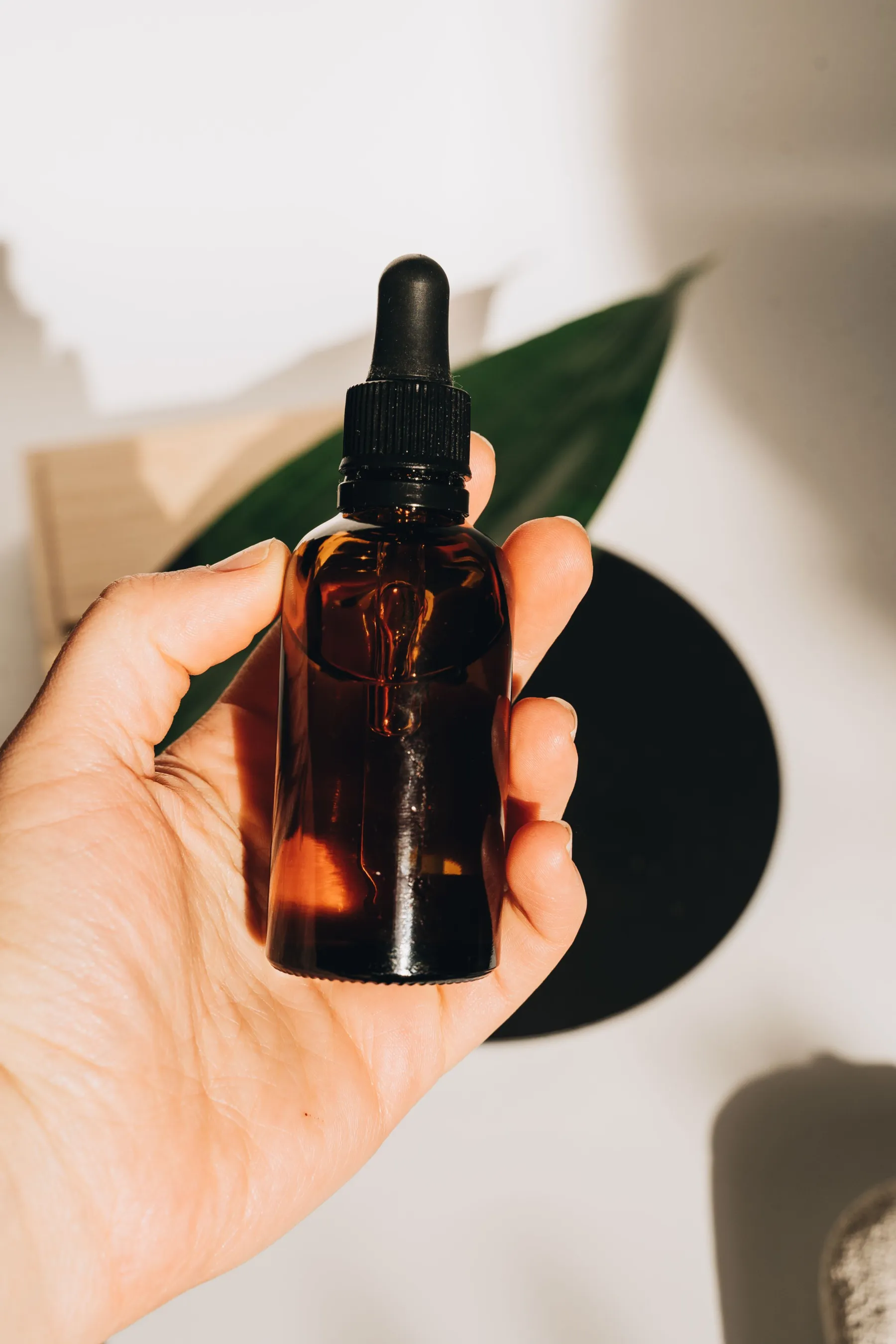
A new serum arrives and the natural thing is to use it all over your face that same night. Most of the time nothing happens. When something does, though, you are left with an irritated face and no idea whether to blame the new product, the weather or the three other things you changed that week.
A slower start solves that. The timeline below takes about two weeks before a product is fully in your routine, and for most of that time it asks for less than a minute a day.
Before day 1: Set up a fair test
One new product at a time
If two products start on the same day and your skin reacts, you cannot tell them apart. Finish introducing one before opening the next. The American Academy of Dermatology also notes, in its guidance on routine order, that using too many products may irritate the skin.
Read the label once
Check the directions: how often, morning or night, leave on or rinse off. Scan the ingredient list for anything you already know disagrees with you. If fragrance is on that list, look for “fragrance” or “parfum”; how to read a moisturizer label explains where to find it.
Keep the rest of your routine still
Same cleanser, same moisturizer, same sunscreen for the next few weeks. A steady background is what lets you see the effect of the one thing that changed. If you do not have a settled routine yet, start with a simple three-step one first.
Days 1 to 10: The test spot
The AAD describes a home method for testing skin care products before using them more widely. In summary:
- Choose a spot about the size of a US quarter, roughly 2.5 cm (1 in) across, where the product will not be rubbed or washed off. The AAD suggests the underside of your arm or the bend of your elbow.
- Apply the product there twice a day for seven to ten days, using the amount and thickness you would normally use.
- Leave it on as long as you normally would. For something you rinse off, such as a cleanser, leave it on the spot for five minutes or as long as the instructions say, then rinse.
- Watch the spot. If after seven to ten days there is no reaction, such as redness, itching or swelling, the AAD’s advice is that you can go ahead and use the product.
The length matters. A reaction does not always appear the first time a product touches your skin, which is why the test runs for a week or more and not a single evening.
What counts as a reaction
Redness, itching, swelling, a rash or burning at the spot. Mild, brief tingling from certain ingredients is a different matter: the AAD notes that retinol and glycolic acid can irritate the skin, particularly sensitive skin, and describes this as normal and temporary. If you are unsure which you are seeing, stop and let the area settle.
Days 11 to 14: First uses on the face
With a clear test spot, the product can move to where it is meant to go. The AAD’s guidance stops at “go ahead and use it.” The following is an extra layer of caution that many people like for anything active or strongly scented; it is optional.
- Begin with a small area or a reduced schedule. Every second or third day for the first week gives you a chance to notice how your face responds before the product is in daily use.
- Use it at night first. If your skin objects, you find out at home with nothing else layered on top.
- Follow the label’s own ramp-up if it has one. Products with ingredients known to irritate often say “start two or three times a week.” Take that at its word.
- Put it in the right place in the order. The AAD’s sequence is cleanser, then any treatment, then moisturizer and/or sunscreen.
Weeks 3 to 6: Daily use and a fair verdict
If all is quiet, move to the frequency on the label. Now the question changes from “does my skin tolerate this?” to “do I want to keep it?”
Give that question time. A moisturizer shows how it feels within a few days. Products that promise a visible change generally say on the pack how long to expect, and it is often weeks. Judging at day five is judging too soon.
A two-line note on your phone helps: the date you started, and one observation a week. It is more reliable than memory, and it is useful information if you ever do need to discuss your skin with a professional.
A steady background is what lets you see the effect of the one thing that changed.
Resist adding the next new product until this one has had its few weeks. That patience is the entire method.
At any point: If your skin reacts
The AAD’s instructions are short:
- Gently wash the product off as soon as possible.
- Do not use it again.
- Apply a cool compress or petroleum jelly to soothe the area if it helps.
If the reaction is severe, or it does not settle, see a dermatologist. The same applies if you keep reacting to products and cannot work out the common thread. A dermatologist can arrange patch testing, a medical test carried out in a clinic that is designed to identify the specific substances a person is allergic to. It is a different thing from the home test spot, despite the similar name.
Common shortcuts, and what they cost
Testing for one night. It catches immediate stinging and little else.
Testing on the back of the hand. Hands get washed many times a day, so the product does not stay put. The inner arm or elbow crease is the AAD’s suggestion for that reason.
Starting a whole new range at once. A matching cleanser, serum and cream may look like one decision. To your skin they are three. Stagger them.
Assuming gentle labels remove the need to test. Terms like “hypoallergenic” have no legal definition in the US, and “unscented” products can still contain fragrance ingredients. See fragrance-free and unscented: what the labels mean. The AAD adds that plant-based botanical ingredients can be fragrance-related too.
The timeline in brief
- Before: one product only; read the label; freeze the rest of the routine.
- Days 1–10: coin-sized spot on the inner arm, twice a day.
- Days 11–14: first uses on the face, at night, every few days.
- Weeks 3–6: regular use; one note a week; decide at the end.
- Any time: if it reacts, wash off, stop, and get help if it is severe or lingers.
Sources
- American Academy of Dermatology How to test skin care products
- American Academy of Dermatology Should I apply my skin care products in a certain order?
- U.S. Food and Drug Administration "Hypoallergenic" Cosmetics
- U.S. Food and Drug Administration Fragrances in Cosmetics
Researched and written by Dates Force Editorial with AI assistance, from the published sources listed above — not from product testing. This is general information about everyday cosmetic care, not medical advice. How we work · Report an error
Keep reading

Building a Simple Skincare Routine You Can Stick To
Cleanse, moisturize, sunscreen in the morning; cleanse and moisturize at night. How to choose each product and arrange things so the habit holds.