How to Choose a Nail Shape for Everyday Wear
Round, squoval, square, oval or almond: pick by what your hands do all week, then by the nail you already have.
Most advice on nail shape starts from what flatters a hand. For nails you wear every day, a better starting point is what your hands do: type, lift weights, wear contact lenses, wash up, play an instrument, fasten small buttons on small children. The shape that survives your week is the one that will look good by Friday.
Five shapes, in plain terms
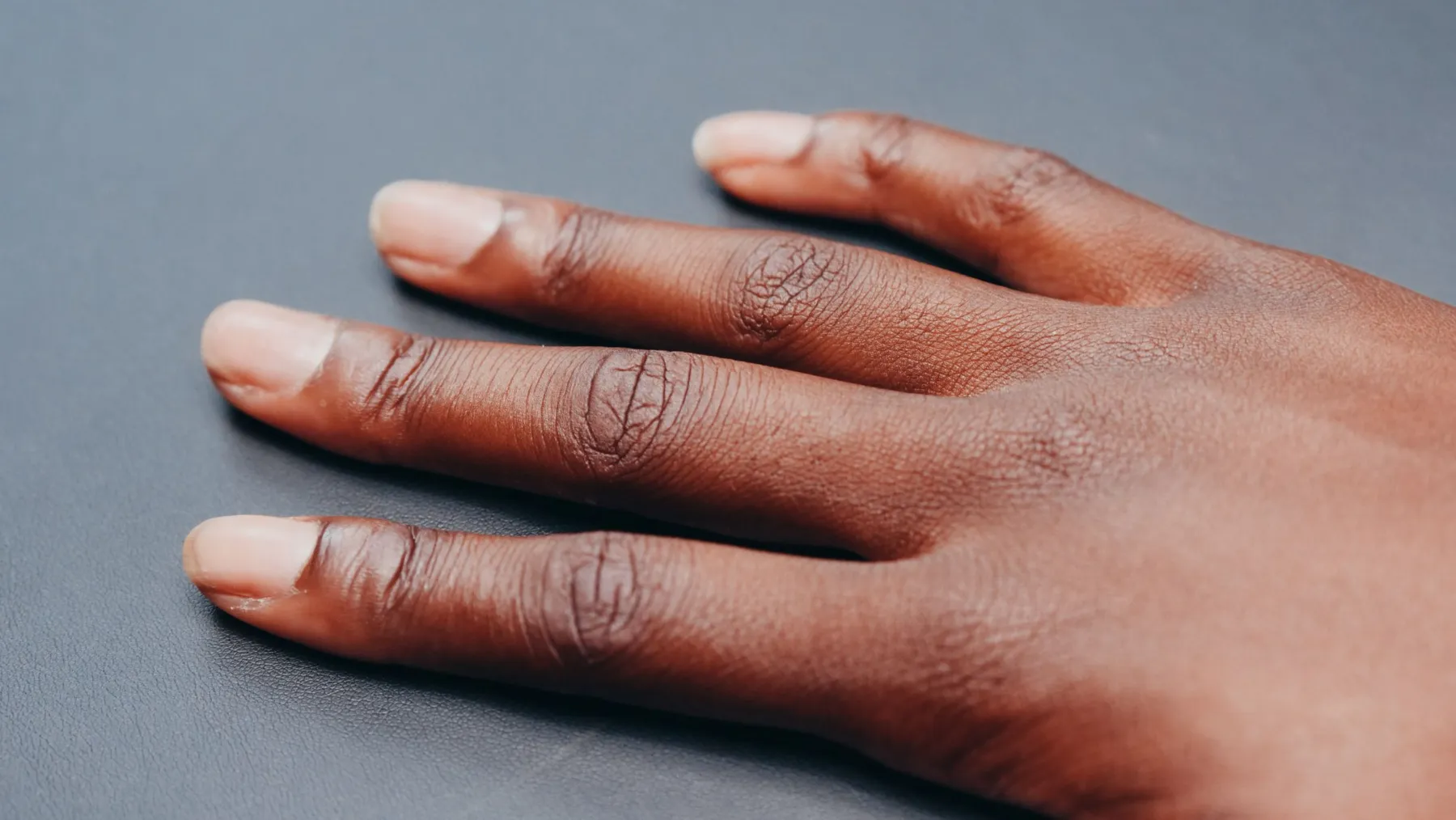
- Round. The tip follows a soft curve, like the end of the finger. The side edges curve in gently.
- Squoval. Straight across the top, with the corners rounded off. Short for “square oval.”
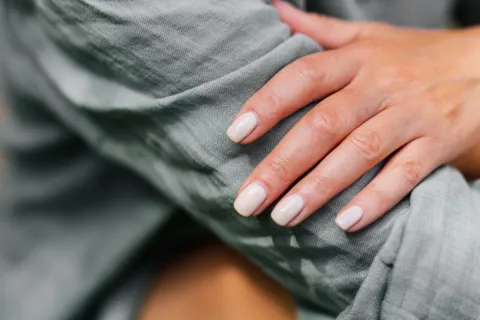
- Square. Straight across the top, with sharp or barely softened corners and straight sides.
- Oval. Sides taper slightly toward a rounded tip; longer and more egg-shaped than round.
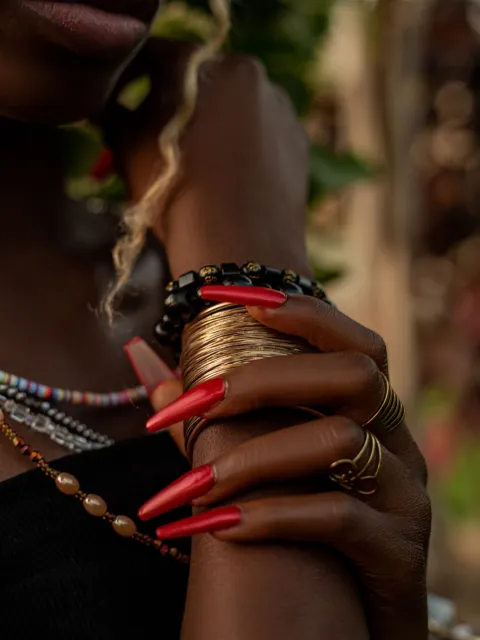
- Almond. Sides taper more noticeably to a narrow, rounded point.
Sharper shapes such as stiletto and coffin exist too, but they rely on length and usually on reinforcement, so they sit outside an everyday, natural-nail guide.
Shape by what your hands do
| Your week involves | Shapes that tend to cope | Why | Length to aim for |
|---|---|---|---|
| Typing most of the day | Round, squoval | No corners to click or catch on keys | At or just past the fingertip, so the pad meets the key |
| Gym, climbing, racquet sports | Round | Least edge exposed to knocks and grips | Short; no free edge beyond the fingertip |
| Caring for babies or small children | Round | No corners near delicate skin | Short |
| Cooking, cleaning, gardening | Round, squoval | Fewer places for dirt to lodge and fewer edges to chip | Short to medium, plus gloves |
| Guitar, piano, strings | Round | Fingertip contact matters more than shape | Short on the fretting or keyboard hand; players have their own rules for the other |
| Contact lenses | Round, squoval, oval | You handle lenses with the pads of the fingers; a point gets in the way | Short to medium |
| Mostly desk and social, little manual work | Oval, almond, square | These shapes show best with a little length, and your week allows it | Medium |
| Touchscreens and card readers all day | Any shape, kept short to medium | Screens respond to the fingertip, not the nail | Short to medium |
If two rows apply to you, go with the more demanding one. A shape that suits the gym will also suit the office.
Corners, sides and why they matter
Two things decide how well a shape wears: its corners and how much of the side wall is left.
Sharp corners are the part of a nail most likely to snag on fabric or hair. The American Academy of Dermatology’s advice for trimming is to cut nails nearly straight across and then slightly round the corners, which it says helps keep them strong and stops them catching on clothing or furniture. That description is, in effect, a squoval or a soft round shape.
Tapered shapes are made by filing the sides inward. Oval takes a little off; almond takes more. The more of the side that is filed away, the narrower the tip that carries any knock. This is common manicure reasoning, not a measured rule, but it matches experience: almond on natural nails tends to suit people whose nails are fairly sturdy and whose days are easy on their hands.
The shape that survives your week is the one that will look good by Friday.
Let your own nail make part of the decision
Look at your cuticle line
A long-standing manicurist’s guideline is to mirror the curve at the base of the nail in the tip. A rounded base suits a round or oval tip; a flatter, squarer base suits squoval or square. Mirroring tends to look balanced because the nail reads as one consistent outline.
Look at width and length of the nail bed
- Wide nail beds: round and oval follow the width without emphasizing it; a sharp square does the opposite, which is a look some people choose on purpose.
- Narrow nail beds: squoval and square add a sense of width.
- Short nail beds: round with a sliver of free edge makes the most of the length that is there.
These are visual effects, not corrections. There is no hand that a given shape is wrong for.
Look at how your nails break
If your nails usually split at the corners, a shape with no corners (round) removes the weak point. If they peel or bend at the tip, shorter is the kinder choice in any shape.
How to file each shape
For all of them, use a fine-grit file and stroke in one direction, from the side toward the center. The AAD notes that filing back and forth can weaken nails.
- Round: file each side in a gentle arc toward the center so the tip echoes the fingertip.
- Squoval: hold the file flat against the tip and file straight across; then soften each corner with two or three light strokes.
- Square: file straight across, keep the sides parallel, and take only the sharpness off the corners with a single pass.
- Oval: angle the file slightly under the nail and work from each side wall toward the center, taking a little more from the sides than for round.
- Almond: find the center of the tip, then file each side toward it at a steeper angle, and round the point so it is not sharp.
File all ten nails, then hold your hands up together, fingers bent toward you, and compare. Evenness between nails reads as “well kept” more than any particular shape does. The full routine, from filing to top coat, is in our beginner-friendly at-home manicure.
Three reliable defaults
- Hands-on life, low upkeep: short round.
- A bit of length that still copes with a keyboard: medium squoval.
- A more elongated look for a gentle week: medium oval.
Short, rounded shapes are also the easiest canvas for understated designs; see five minimal nail ideas that work with almost anything. And if you want to wear a longer or more tapered shape for a weekend without committing your own nails to it, press-on nails are a way to try it.
Sources
- American Academy of Dermatology How to trim your nails
Researched and written by Dates Force Editorial with AI assistance, from the published sources listed above — not from product testing. This is general information about everyday cosmetic care, not medical advice. How we work · Report an error
Keep reading
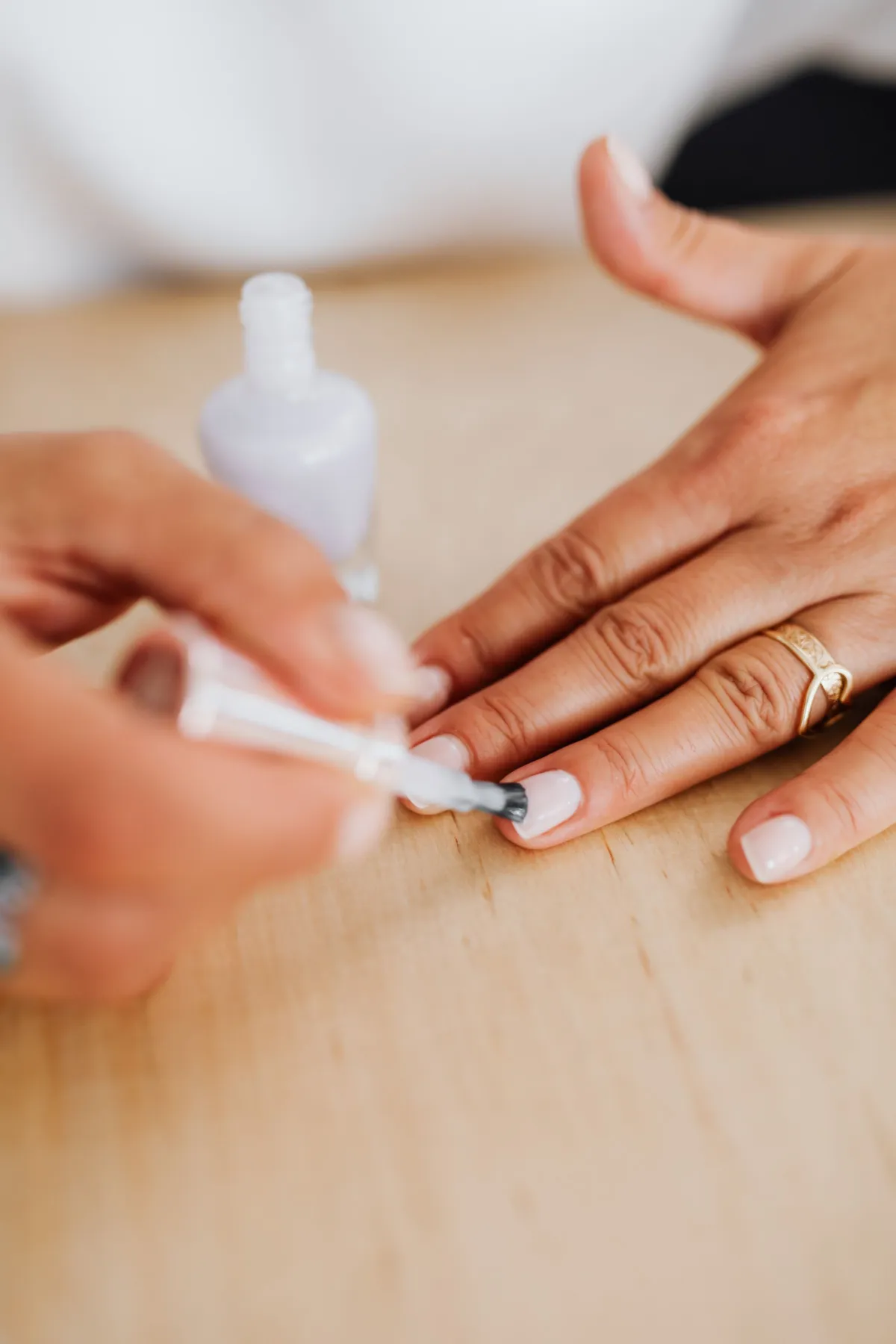
A Beginner-Friendly At-Home Manicure
Eleven steps from bare nails to dry polish, with the two habits dermatologists stress most: file in one direction and leave your cuticles alone.