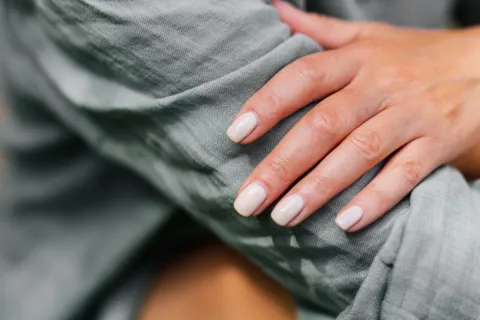
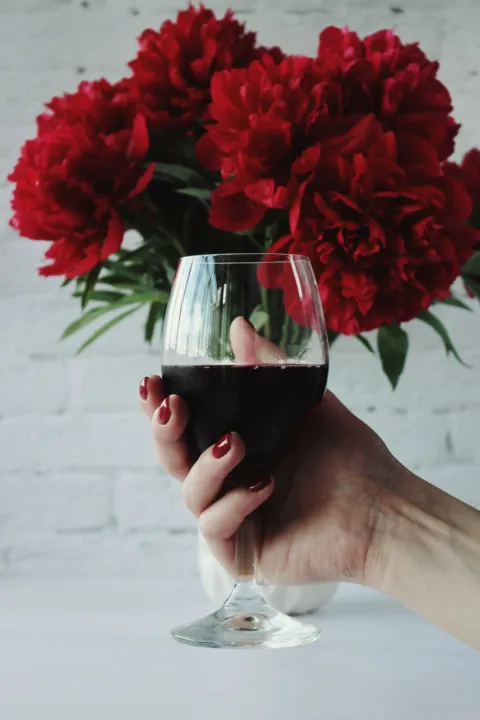
Sheer, Cream or Shimmer: A Guide to Polish Finishes
The same shade behaves differently as a sheer, a cream or a shimmer. How each finish applies, wears and grows out, and when to reach for it.
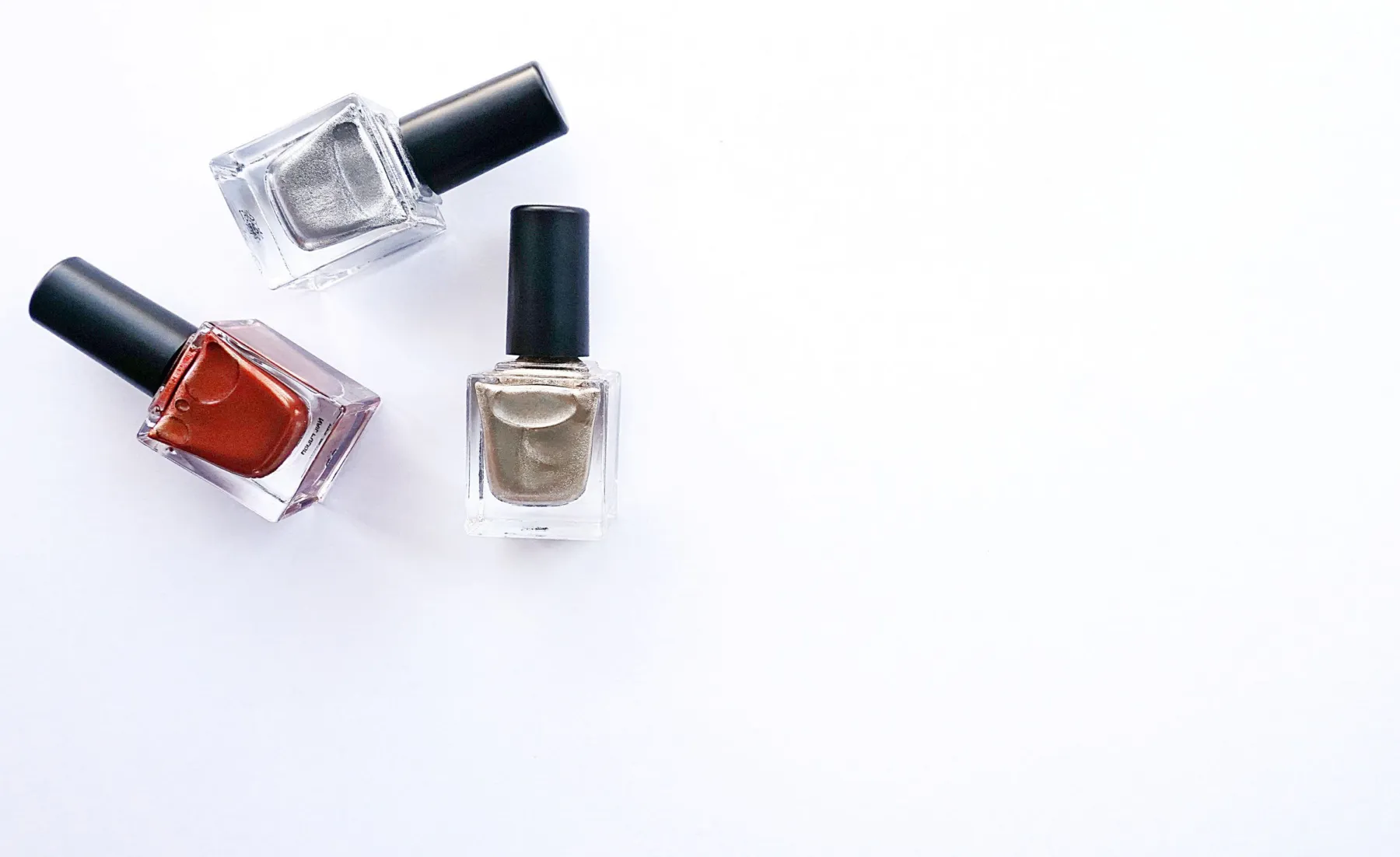
Pick up three bottles in the same soft pink, one sheer, one cream, one shimmer, and you are holding three different manicures. The shade name tells you the color. The finish tells you how it will behave: how it applies, how many coats it takes, what it does to the look of the nail underneath and how it wears. For choosing a polish you will be happy with on day four, finish matters at least as much as shade.
Here is how the three most common finishes work, what each is good at, and how to handle it.
Sheer
What it is
A sheer polish has a low level of pigment in a clear base, so the nail shows through. One coat gives a tint; two or three build a soft, translucent wash. The category includes “jelly” polishes, which are sheer with a glossy, glass-like look, and milky sheers, which are slightly clouded.
What it does well
- It is forgiving to apply. There is no hard edge of color, so a slightly uneven line near the cuticle is hard to see.
- It grows out quietly. The gap at the base of the nail is far less visible than with an opaque shade.
- Chips are discreet. A missing corner of pale sheer pink does not draw the eye.
- It dries quickly when worn as one or two thin coats, because there is less on the nail.
What to know
Because the nail is visible, so is everything about it: the white of the free edge, any staining left by a previous dark polish, uneven lengths. Many people like that natural look; if you would prefer more evenness, choose a milky sheer over a clear-based one.
Sheers can streak if you go back over a coat that has started to set. Use a well-loaded brush, three strokes, and leave it alone.
Cream
What it is
A cream polish is opaque, solid color with a smooth, glossy surface and no visible particles. It is the classic finish, the one most people picture when they think of nail polish. A red cream, a navy cream, a beige cream: the color is the whole story.
What it does well
- True, even color. What you see in the bottle is close to what you get on the nail, usually in two coats.
- A crisp, deliberate look. Cream reads as polished in every sense, from pale neutrals to deep shades.
- It covers. The nail underneath is hidden, so the result is uniform across all ten.
- It is the base for most nail art, because a flat, opaque ground shows fine lines and dots clearly.
What to know
Cream is the most demanding finish. Opaque color shows every wobble at the edge, every ridge in the surface and every chip, especially in dark or bright shades. It rewards the careful parts of a manicure: thin coats, a small gap left at the skin, a clean-up brush afterward, and a top coat. Those steps are laid out in our beginner-friendly at-home manicure.
Strong pigments can also leave their mark. The American Academy of Dermatology suggests an extra layer of base coat before bright red or orange polish to protect against discoloration, and notes that yellowed nails usually recover over several weeks if the color is not reapplied.
Very pale creams and pastels are known for streaking. Three thin coats generally look better than two heavy ones.
Shimmer
What it is
Shimmer polish carries very fine reflective particles in a tinted or clear base. The particles are small enough that you see glow and movement instead of individual specks. Close relatives include pearl and frost finishes (finer, with visible brush lines), metallics (dense and mirror-like) and glitter (larger, distinct particles).
What it does well
- It catches light, which gives the nail dimension, particularly under evening or artificial lighting.
- It blurs the surface. Reflective particles scatter light, so slight ridges and unevenness in the nail are less noticeable than under a flat cream.
- It wears quietly. Tip wear and small chips are harder to spot in a shimmering surface.
- It layers. One coat of a sheer shimmer over a cream changes the look without a new manicure.
What to know
Frosts and metallics can show brush strokes. Keep each stroke straight from base to tip, and avoid curving the brush. A top coat smooths the surface.
The finer the shimmer, the easier the removal. Fine shimmer comes off much like a cream; chunky glitter clings and takes patience. Hold a remover-soaked pad on the nail for longer before wiping, and resist scraping at it.
The shade name tells you the color. The finish tells you how it will behave.
Side by side
| Sheer | Cream | Shimmer | |
|---|---|---|---|
| Coverage | Translucent | Opaque | Sheer to opaque, depending on the polish |
| Typical coats | 1–3 | 2 (3 for pastels) | 2 |
| Ease of application | Easiest | Most demanding | Moderate; watch for brush strokes |
| How visible chips are | Low | High, especially in dark shades | Low to moderate |
| How visible grow-out is | Low | High | Moderate |
| Shows the nail surface | Yes | Shows ridges through the gloss | Softens it |
| Overall effect | Fresh, barely there | Clean, graphic | Luminous |
Which one, when
- You are new to painting your own nails: sheer. It hides the learning curve.
- You want a manicure to last a busy week without touch-ups showing: sheer or fine shimmer.
- You want color to be the point: cream.
- You have ten minutes: one coat of sheer and a top coat.
- Your nails have ridges you would like to play down: shimmer, or a milky sheer.
- You want one manicure for day and evening: a neutral cream, with a coat of sheer shimmer added before you go out.
For designs that use these finishes with very little effort, see five minimal nail ideas. And when there is a particular date on the calendar, our guide to choosing a nail color for an event picks up where this one stops.
Sources
- American Academy of Dermatology Manicure and pedicure safety
Researched and written by Dates Force Editorial with AI assistance, from the published sources listed above — not from product testing. This is general information about everyday cosmetic care, not medical advice. How we work · Report an error
Keep reading
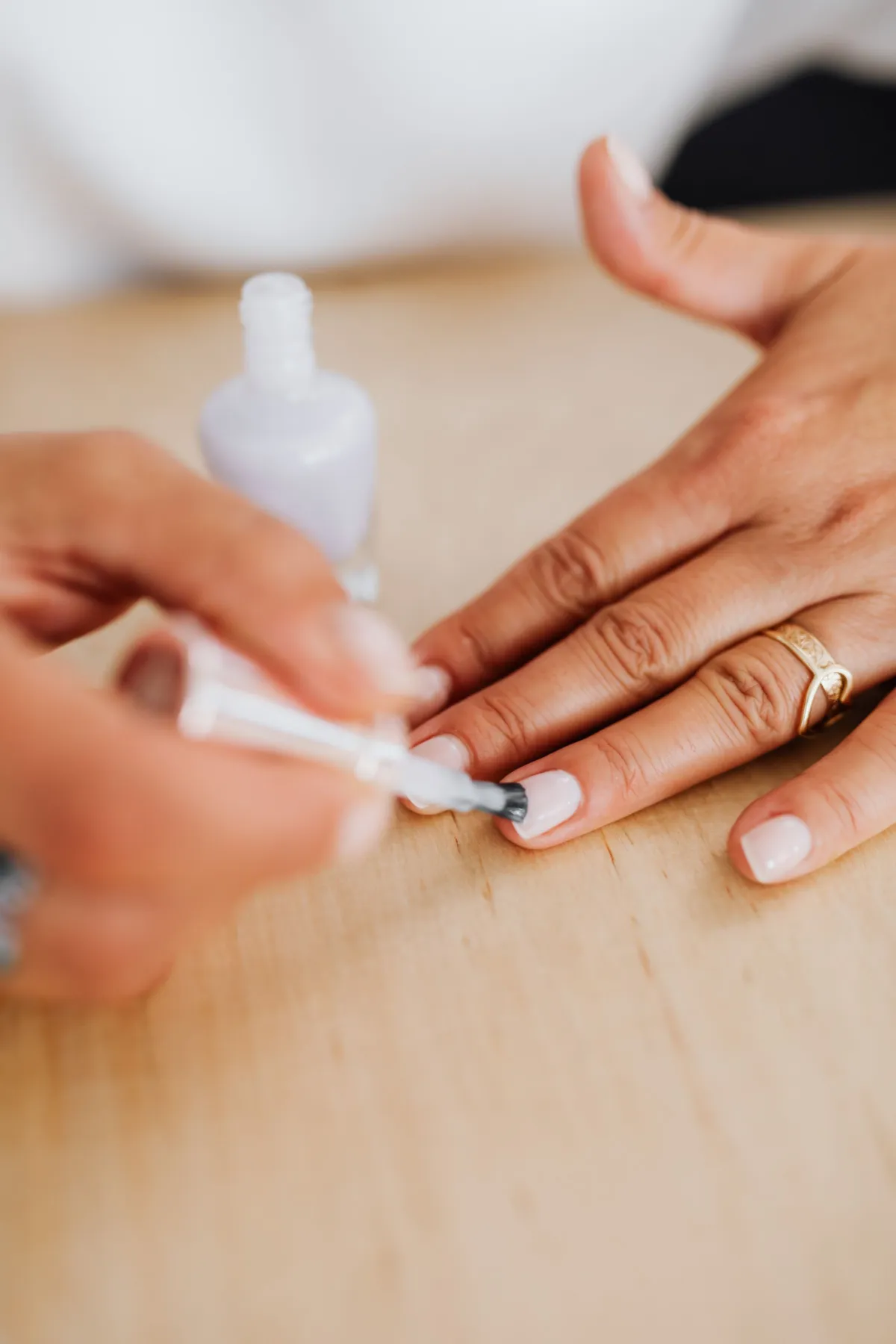
A Beginner-Friendly At-Home Manicure
Eleven steps from bare nails to dry polish, with the two habits dermatologists stress most: file in one direction and leave your cuticles alone.